Canada’s Cybersecurity Roadmap: OSCP, OSWE, OSEP & OSED Explained
If you’re charting a career in penetration testing or application security from the Great White North, the acronyms OSCP, OSWE, OSEP and OSED probably pop up on every forum and job posting you read. These four credentials, all issued by Offensive Security, represent distinct milestones on the offensive security learning path. Below, we’ll unpack what each certification covers, how they fit into the Canadian cyber‑security landscape, and practical tips for deciding which one aligns with your goals.
Understanding OSCP, OSWE, OSEP, and OSED
The four exams share a common philosophy: hands‑on, practical assessment rather than multiple‑choice trivia. Each one focuses on a different attack surface:
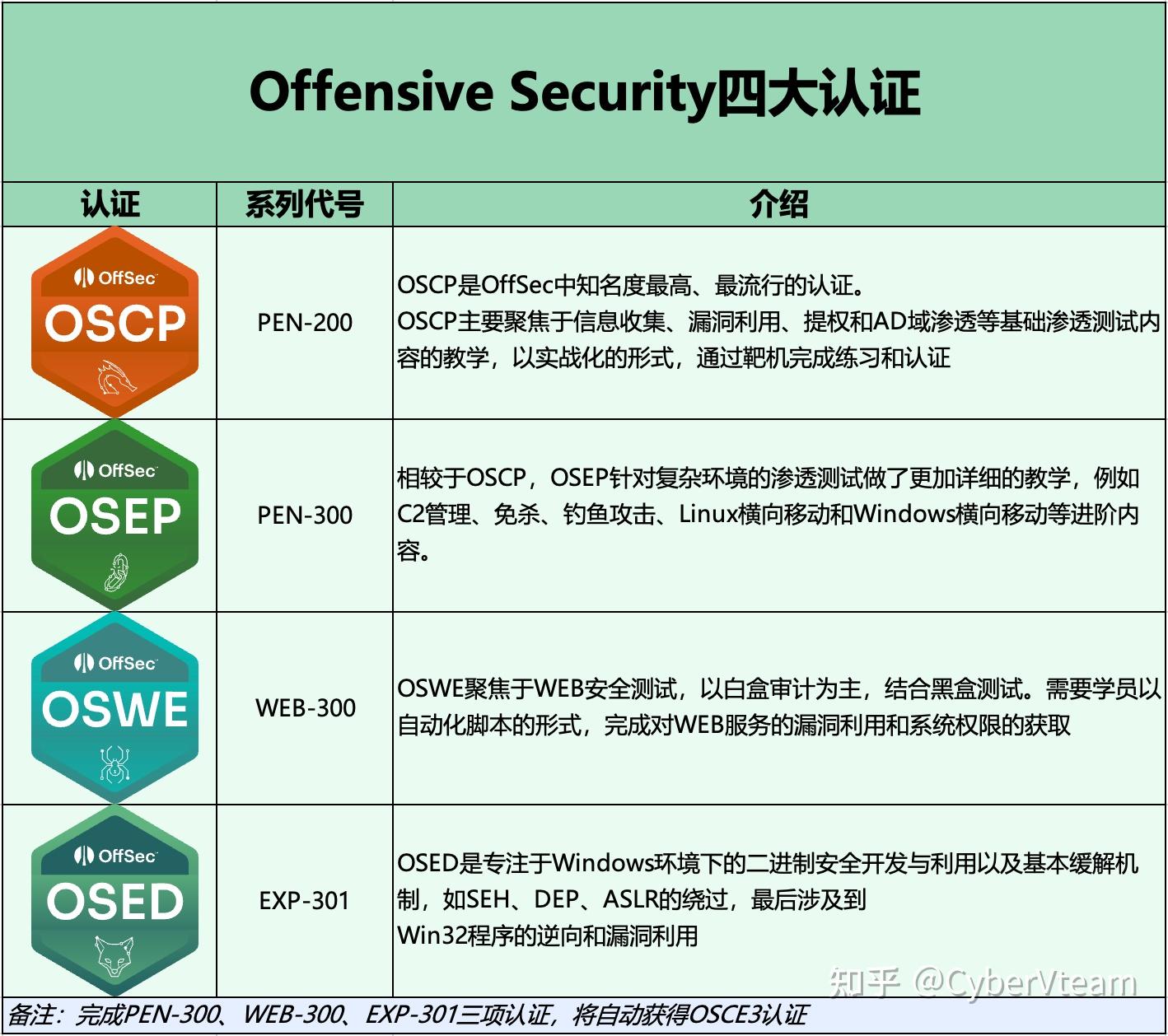
- OSCP (Offensive Security Certified Professional) – the classic “pen‑test basics” exam, emphasizing network exploitation and manual hacking.
- OSWE (Offensive Security Web Expert) – deep‑dive into web application attacks, from injection flaws to advanced client‑side exploitation.
- OSEP (Offensive Security Experienced Penetration Tester) – builds on OSCP, adding post‑exploitation, pivoting and red‑team style tactics.
- OSED (Offensive Security Exploitation Development) – focuses on crafting reliable exploits, reverse engineering, and vulnerability research.
All four require you to complete a 24‑hour practical exam where you must compromise a series of lab machines and submit a thorough report. The hands‑on nature resonates well with Canadian employers who value demonstrable skill over theoretical knowledge.
Why Canadian Professionals Favor Offensive Security
Canada’s cyber‑security market has grown steadily, with the federal government investing billions in protecting critical infrastructure. Companies in Toronto, Vancouver and Montreal often list OSCP or OSWE as preferred qualifications. The reason? Offensive Security’s labs simulate realistic network topologies and are language‑agnostic, making them relevant whether you’re defending a Toronto‑based fintech firm or a remote government agency.
Moreover, the certifications are globally recognized, so you can leverage them for cross‑border opportunities with U.S. firms while still meeting Canada’s own credential expectations.
OSCP: The Starting Point for Most Pentesters
OSCP remains the most popular entry‑level offensive credential. The course, Penetration Testing with Kali Linux (PWK), provides a structured curriculum that walks you through reconnaissance, vulnerability scanning, exploitation, and post‑exploitation. The exam consists of five machines; you must gain “root” or “administrator” on at least three to pass.
For Canadians, the cost (≈ US$999 for the exam plus lab fees) can be mitigated through employer sponsorship or government upskilling grants. Many provincial tech training programs now list OSCP as an eligible credential for funding.
OSWE: Specializing in Web Application Security
Web apps are the most common attack vector in Canada’s financial and health sectors. OSWE’s Web Application Exploits and Defenses (WAE) course dives into OWASP Top 10 issues, custom payload development, and advanced techniques like bypassing WAFs. The 24‑hour exam expects you to exploit several web challenges and produce a detailed exploitation report.
If you already have a solid networking foundation (perhaps an OSCP under your belt), OSWE is the logical next step. Canadian employers often pair OSWE with secure‑coding initiatives, so the certification can open doors to hybrid roles that blend development and security.
OSEP: Elevating to Red‑Team Mindset
OSEP assumes you’re comfortable with basic pen‑testing and want to expand into lateral movement, privilege escalation across multiple hosts, and stealthy exfiltration. The Advanced Penetration Testing (APT) course covers Windows and Linux pivoting, Active Directory abuse, and custom scripting for automation.
In Canada’s increasingly regulated environment—think privacy statutes like PIPEDA—organizations value professionals who can simulate realistic adversary behavior. OSEP graduates often land senior consulting gigs or become internal red‑team leads for large enterprises.
OSED: Mastering Exploit Development
OSED is perhaps the most niche of the four, targeting those who want to write reliable shellcode, bypass modern mitigations, and understand the binary level of vulnerabilities. The Exploitation Development (EXP) course covers topics like Return‑Oriented Programming, heap spraying, and kernel exploitation.
Because OSED demands a strong foundation in C/C++ programming and assembly, it’s best pursued after OSCP or OSEP. Canadian firms developing embedded systems, industrial control software, or high‑frequency trading platforms prize this skill set, especially when protecting critical infrastructure.
Practical Considerations for Canadian Candidates
Cost and Funding: While the exam fees are set in USD, many Canadian training providers accept CAD and can bundle lab access with the exam. Check with local cyber‑security associations—like the Canadian Information Processing Society (CIPS)—for scholarship opportunities.
Time Investment: Each course expects roughly 200–300 hours of study. If you’re working full‑time, allocate evenings and weekends; many candidates report a 3‑month preparation window for OSCP and up to 6 months for OSED.
Recognition: All four certifications appear on the Canadian Cyber Incident Response Centre (CCIRC) preferred‑list for security personnel. Adding the credential to your LinkedIn profile or résumé can significantly boost your visibility to recruiters in Toronto’s fintech corridor or Vancouver’s tech startups.
Choosing the Right Path for You
Start with OSCP if you’re new to offensive security and want a broad foundation. Once comfortable, evaluate your career focus:
- Web‑application focus → OSWE.
- Enterprise‑level red‑team work → OSEP.
- Exploit research or vulnerability analysis → OSED.
Remember, the certifications are cumulative, not mutually exclusive. Many Canadian professionals eventually hold two or three of them, showcasing a progressive skill set that aligns with evolving job requirements.
FAQ
Which certification is most valued by Canadian employers? Generally, OSCP is the baseline requirement for penetration‑testing roles, while OSWE and OSEP are highly regarded for specialized positions. OSED is niche but prized in sectors that develop low‑level software.
Can I take these exams remotely from Canada? Yes. All four exams are delivered online via a secure VPN to the lab environment. You’ll need a reliable high‑speed internet connection and a compatible operating system (Linux or Windows).
Do I need a security clearance to work in Canada after earning these certifications? Not for the certifications themselves, but many government contracts require a baseline clearance. Holding an OSCP or OSEP can make the clearance process smoother, as it demonstrates proven technical competence.
How long are the certifications valid? Each credential is valid for three years, after which you must renew by either retaking the exam or completing a continuing education credit through Offensive Security’s “Proving Grounds” platform.