Drafting a Sweat‑Equity Partnership Agreement: A Practical Guide
When a startup’s capital is thin but talent is abundant, sweat equity offers a viable path to growth. A well‑structured sweat‑equity partnership agreement ensures that contributors are rewarded fairly, responsibilities are clear, and the company’s long‑term interests are protected. Below is a step‑by‑step walk‑through that balances legal rigor with practical wisdom.
Why Sweat‑Equity Agreements Matter
Without a formal contract, enthusiasm can turn into dispute. A written agreement:
- Defines how much ownership each partner earns.
- Sets expectations for deliverables and timelines.
- Clarifies intellectual property ownership.
- Provides an exit strategy if the partnership ends.
- Reduces future ambiguity that can derail a venture.
In short, the agreement is the blueprint that keeps the partnership aligned and the business protected.
Key Components of a Sweat‑Equity Partnership Agreement
- Parties – Full legal names and addresses.
- Equity Allocation – Percentage of shares granted.
- Roles and Responsibilities – Specific duties, hours, and deliverables.
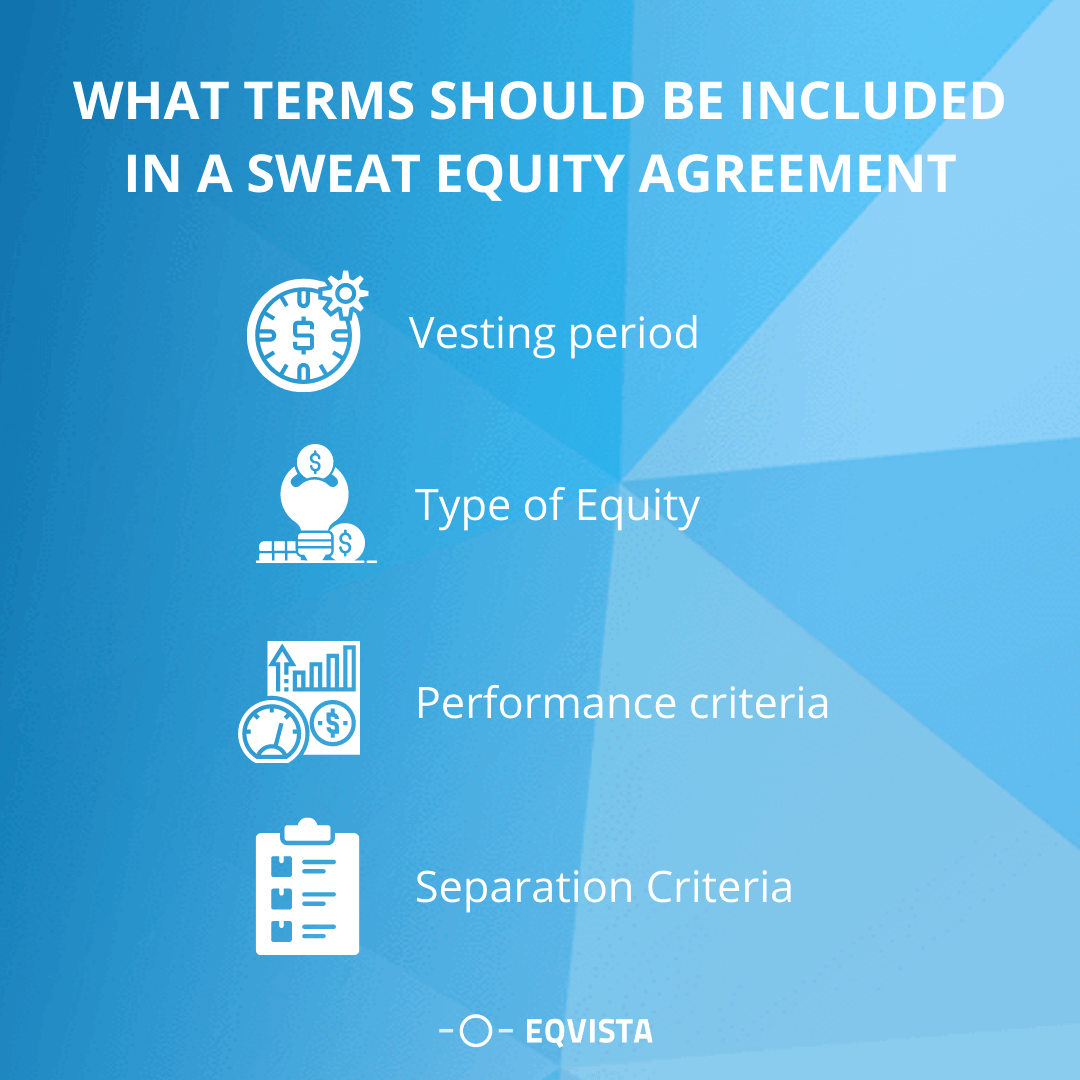
- Vesting Schedule – Time‑based or milestone‑based vesting terms.
- Intellectual Property – Ownership and usage rights for code, designs, or data.
- Term & Termination – Duration, conditions for termination, and post‑termination rights.
- Dispute Resolution – Arbitration or mediation clauses.
- Miscellaneous – Confidentiality, non‑compete, and governing law.
Equity Allocation: How to Quantify Sweat
Begin by estimating the monetary value of the expected work. Compare it to the company’s valuation to calculate the equity slice. If the partner will provide three months of full‑time effort, and a full‑time role is worth 10% of ownership, the partner might receive 2.5% after a 12‑month vesting period. Adjust for role seniority, strategic importance, and market benchmarks.
Vesting Schedules and Milestones
Time‑based vesting—commonly 4 years with a 1‑year cliff—ensures that a partner earns shares gradually. Milestone vesting ties equity to tangible achievements, such as product launches or revenue targets. Combining both mechanisms balances commitment and performance incentives.
Defining Roles and Deliverables
Outline each partner’s specific tasks, deliverable dates, and quality standards. Use plain language and, where appropriate, attach a separate statement of work as an appendix. Clear definitions help avoid misaligned expectations later.
Drafting the Agreement Step by Step
- Identify Parties – List legal entities or individuals, including their roles.
- Agree on Value – Document the agreed monetary value of each partner’s contribution.
- Outline Roles – Detail responsibilities, hours, and deliverables.
- Draft Vesting – Specify vesting periods, cliffs, and acceleration clauses.
- Include IP Clauses – Assign ownership of any inventions, trademarks, or code.
- Address Exit Scenarios – Define what happens if a partner leaves, is removed, or the company is sold.
- Review with Legal Counsel – Ensure compliance with local securities and employment laws.
- Sign & Execute – Each party signs, witnesses, and stores the agreement securely.
Sample Clause: Equity Vesting
Vesting: The Partner shall receive 100% of the allocated equity shares over a four‑year period, subject to a twelve‑month cliff. Upon each anniversary of the effective date, 25% of the total shares shall vest, provided the Partner remains in active service. If the Partner ceases active participation before vesting, any unvested shares shall be forfeited.
Common Pitfalls to Avoid
1. Under‑valuing Sweat – Overly generous equity can dilute founders and create tension. Use industry benchmarks to justify allocations.
2. Vague Role Definitions – Ambiguities in deliverables can lead to disputes. Be as specific as possible.
3. Ignoring IP Ownership – Without clear IP clauses, later ownership battles can arise, especially if partners develop proprietary software.
4. Overlooking Exit Clauses – Without an exit plan, a partner’s departure can stall the business.
5. Failing to Update the Agreement – As roles evolve, revisit the contract to reflect new responsibilities or equity adjustments.
FAQs About Sweat‑Equity Partnership Agreements
- What is a “sweat equity” partnership? – A partnership where non‑cash contributions, like labor or expertise, are compensated with a percentage of ownership.
- How is equity value determined? – By estimating the market worth of the work provided and relating it to the company’s valuation.
- Can a partner exit early and keep all shares? – Typically, vesting schedules require active service; early exit usually forfeits unvested shares.
- Do sweat‑equity agreements require legal review? – Yes, to ensure compliance with securities, tax, and employment regulations.