Gold Rush in Big Bear: Past Mining History and Modern Legacy
The idea of striking it rich in the pine‑scented valleys of the San Bernardino Mountains still captures imaginations today. While the legendary California Gold Rush of 1849 unfolded along the Sacramento River, a smaller, more rugged surge of prospectors trekked toward Big Bear in the early 1860s. This Gold Rush in Big Bear was never a massive boom, but its footprints are still visible in the landscape, the local lore, and a handful of activities that draw curious visitors each summer.
Origins of the Big Bear Gold Rush
By the mid‑19th century, news of gold discoveries in the Sierra foothills had traveled faster than the stagecoaches that carried hopeful miners westward. When word reached the remote Big Bear Valley—then a sparsely populated hunting ground for the Serrano people—adventurers saw an opportunity to work a terrain that had escaped the frenzy of the larger strikes.
Historical accounts suggest that the first claims were filed around 1862, primarily by trappers and loggers who stumbled upon glittering flakes while following riverbeds. The most cited source, the San Bernardino County Historical Society, notes that the initial rush was driven by a handful of families rather than organized mining companies. Their motivation was simple: the promise of a few ounces of placer gold could fund a winter’s supply of furs or a modest cabin.
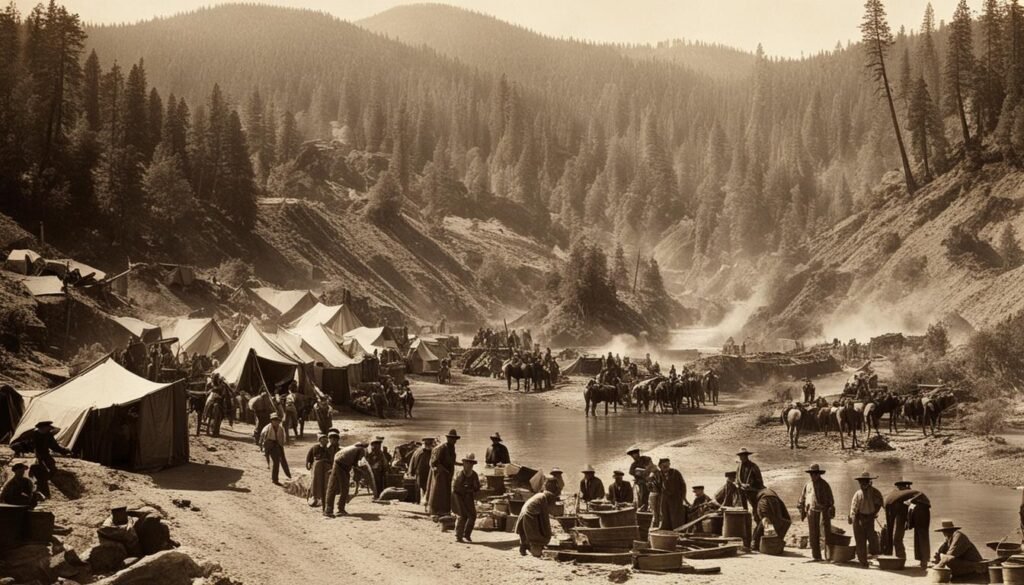
Unlike the bustling towns of Coloma or Grass Valley, Big Bear’s mining camps remained modest—tents and lean‑to shelters clustered near the Bear Creek and the upper reaches of the Santa Ana River. The region’s high elevation and heavy snowfall limited the season to roughly May through October, which in turn kept the operations small and short‑lived.
How Miners Extracted Gold in the Mountains
The rugged topography demanded a hands‑on approach. Most prospectors relied on placer mining techniques, turning streams into makeshift laundries to separate heavy gold particles from sand and gravel.
Placer Panning
- Shallow pans, often repurposed from kitchenware, were swirled in water to let the denser gold settle.
- Miners built simple sluice boxes from timber, using riffles to trap gold as water rushed through.
- During dry spells, they dug small trenches to channel water from higher streams into their pans.
Hard‑rock mining was far less common but not unheard of. A few enterprising groups attempted to follow gold veins into the granitic hillsides, employing basic picks, hammers, and a hand‑cranked stamp mill to crush ore. The effort required significant labor and capital—resources that most small‑scale miners simply did not have.
Why the Rush Faded Quickly
Several factors conspired to dim the spark of the Big Bear gold fever. First, the deposits were modest; most placer sites yielded only a few ounces per day, insufficient to sustain long‑term profitability. Second, the remote location meant that transporting equipment and supplies was costly and weather‑dependent.
By the late 1870s, larger mining districts in nearby Riverside and San Diego counties began to dominate the regional market, drawing away both labor and investment. Additionally, the establishment of Big Bear as a summer resort in the early 20th century shifted the local economy toward tourism rather than extraction.
Environmental concerns also played a role. Early miners, unaware of ecological impacts, caused siltation and habitat disruption in the creeks. As conservation ideas gained traction in the 1930s, authorities began to restrict further mining activities, effectively sealing the era.
The Legacy in Today’s Big Bear
Modern visitors can still feel the echo of those dusty days, especially at the historic Gold Hill trail near Big Bear Lake. The path, marked with interpretive signs, follows the route once trodden by prospectors and offers occasional glimpses of old tailings—piles of dark rock that once held the promise of wealth.
Several outfitters now offer guided gold‑panning experiences for tourists. While the chances of finding a sizable nugget are slim, the activity serves as an educational window into the past, allowing participants to handle the same brass pans and sluice boxes used a century ago.
Beyond recreation, the mining heritage has spurred a modest preservation movement. Local museums, such as the Big Bear Valley Historical Museum, display tools, ledger books, and photographs that chronicle the boom and bust. These artifacts help frame the broader narrative of how natural resource extraction shaped settlement patterns across Southern California.
Preserving the Mining Heritage
Efforts to protect the remaining mining sites balance historical curiosity with ecological responsibility. The U.S. Forest Service, which manages much of the surrounding national forest, designates certain old claim areas as “cultural resources,” limiting new disturbance while allowing controlled public access.
Community groups have also launched “heritage hikes,” where volunteers clear overgrown trails and install informative plaques. Such projects not only keep the stories alive but also encourage responsible outdoor recreation, reminding hikers that the landscape they enjoy was once a laboratory of ambition and hardship.
In recent years, discussions about reviving small‑scale, environmentally friendly mining have surfaced, driven by the rise of artisanal gold markets. However, stringent state regulations and a strong local emphasis on preserving the scenic character of Big Bear keep large‑scale proposals at bay.
FAQ
Did gold mining actually occur in Big Bear?
Yes. Small placer and occasional hard‑rock operations existed from the early 1860s through the 1880s, though they never reached the scale of the major California rushes.
Can visitors still pan for gold at Big Bear Lake?
Guided tours and seasonal “panning days” are offered by a few local businesses. While finding gold is rare, the activity provides a hands‑on glimpse of historic techniques.
What remnants of the old mining camps remain today?
Most structures have vanished, but scattered tailings, reclaimed claim markers, and the Gold Hill trail preserve the physical memory of the era.
Is modern gold mining permitted in the Big Bear area?
New large‑scale mining is prohibited under state and federal regulations aimed at protecting water quality and the region’s recreational value. Only limited, low‑impact activities such as hobbyist panning are generally allowed with proper permits.