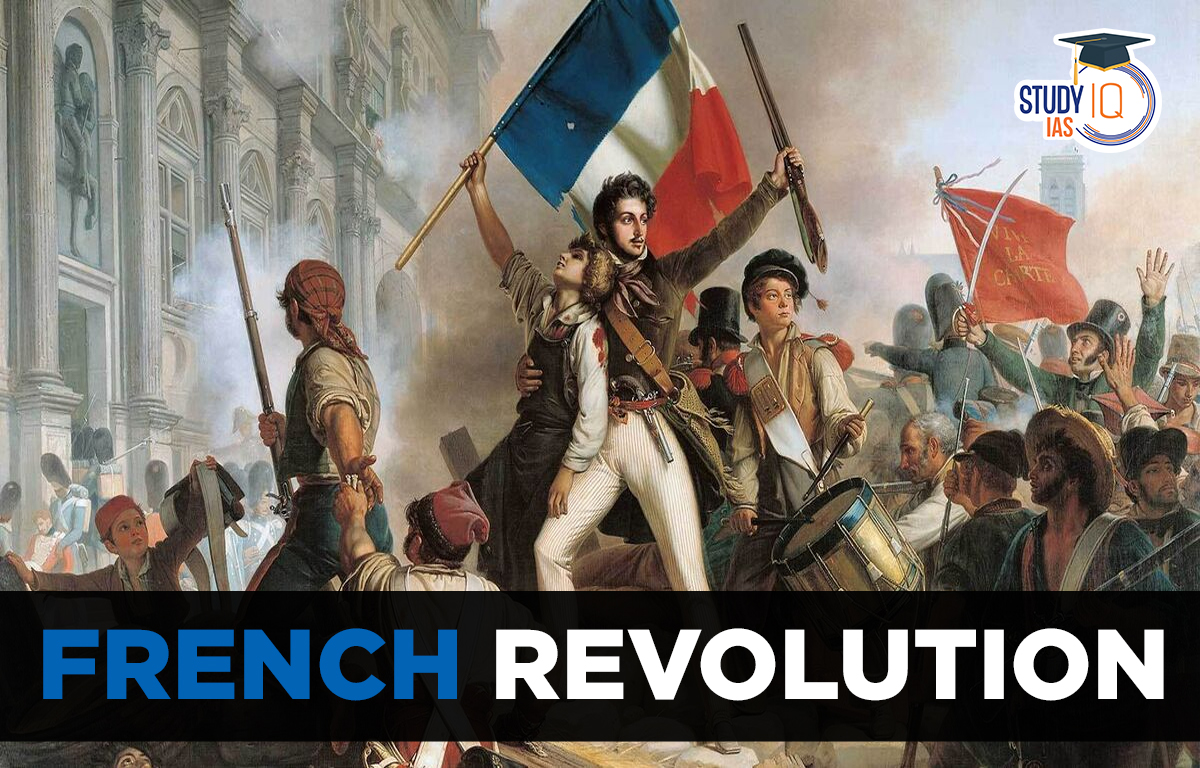
How Enlightenment Ideas Shaped the French Revolution’s Goals
The French Revolution did not erupt in a vacuum; it was the direct outgrowth of a vibrant intellectual climate that questioned old regimes and imagined new societies. French ideas—especially those drawn from the Enlightenment—provided the language and the aspirations that would later be crystallized as the Revolution’s goals. Understanding this connection helps explain why the storming of the Bastille was as much a battle of ideas as it was a clash of arms.
The Enlightenment Foundations of French Revolutionary Thought
By the mid‑18th century, philosophers such as Voltaire, Montesquieu, and Rousseau were circulating pamphlets that challenged divine right, absolute monarchy, and hereditary privilege. Their core messages can be boiled down to a few recurring themes:
- Reason over tradition: Human beings could discover universal principles through rational inquiry.
- Social contract: Legitimate government must be based on the consent of the governed.
- Natural rights: Life, liberty, and property (later rephrased as liberty, equality, fraternity) were inherent to every person.
These ideas seeped into cafés, salons, and university lecture halls across Paris and beyond. They created a shared vocabulary that ordinary citizens could use to articulate grievances. When the fiscal crisis of the 1780s forced King Louis XVI to call the Estates‑General, the delegates arrived already equipped with a philosophical toolkit that demanded change.
From Theory to Practice: Core Goals of the Revolution
Translating abstract philosophy into concrete policy was no easy feat, but the National Assembly quickly identified three interlocking objectives that echoed Enlightenment thought:
- Liberty: Abolishing arbitrary arrests, ending censorship, and guaranteeing freedom of speech.
- Equality: Dismantling feudal dues, removing noble privileges, and establishing a uniform legal code.
- Fraternity: Fostering a sense of national solidarity that could replace regional loyalties.
These goals were codified in landmark documents such as the Declaration of the Rights of Man and of the Citizen, which explicitly cited natural rights and the social contract. The very language of the declaration mirrors Rousseau’s earlier writings, demonstrating a clear line from philosophical treatise to revolutionary manifesto.
Connecting Ideas to Objectives: How Philosophy Guided Action
When the Assembly set about reorganizing France, it did so with a clear intellectual roadmap. For instance, the abolition of feudal dues in August 1789 directly addressed the Enlightenment critique of inherited privilege. Similarly, the introduction of a secular calendar in 1793 reflected Voltaire’s call for reason to replace religious tradition.
Even the more radical phases—like the Reign of Terror—can be traced back to a particular philosophical strain. The Jacobins, inspired by the notion of a virtuous citizenry, believed that temporary authoritarian measures were justified if they protected the larger ideal of liberty. This paradox—using force to safeguard freedom—was a direct, if uneasy, extension of the Enlightenment’s emphasis on ends over means.
Challenges and Compromises: When Ideals Met Reality
Despite the intellectual firepower behind the Revolution, the practical implementation of its goals encountered stubborn obstacles. Economic turmoil, regional uprisings, and foreign wars strained the fledgling republic. As a result, many revolutionary leaders compromised on their original vision: the 1795 Constitution, for example, restored a more conservative executive to stabilize the state.
Moreover, the promise of equality often clashed with entrenched social attitudes. While the legal code abolished aristocratic titles, it did little to eradicate deep‑seated class prejudices. The revolutionary slogan “Liberté, égalité, fraternité” thus remained, in many respects, an aspirational ideal rather than an immediate reality.
FAQ
What Enlightenment ideas most directly influenced the French Revolution?
Rousseau’s concept of the social contract, Montesquieu’s advocacy for separation of powers, and Voltaire’s critique of religious intolerance were the pillars upon which revolutionary leaders built their program.
Did the French Revolution achieve its original goals?
In the short term, many objectives—such as the abolition of feudal privileges and the proclamation of a rights‑based constitution—were realized. However, full social equality and lasting political stability eluded the revolutionaries, prompting subsequent regimes to reinterpret or modify the original aims.
How did the Revolution’s goals evolve over time?
Early phases emphasized liberty and equality, while later periods, especially under the Directory and Napoleon, placed greater emphasis on order and national unity, often at the expense of the more radical egalitarian aspirations.
Are the revolutionary goals still relevant today?
Absolutely. Modern French republican values—secularism, universal rights, and civic solidarity—trace their lineage directly back to the Enlightenment‑inspired goals articulated during the Revolution.