How to Navigate NJ Guardianship Forms: A Simple Guide
When a loved one can no longer make personal decisions, New Jersey courts step in to protect their interests. The paperwork, however, can feel overwhelming at first. This guide walks you through the essential NJ guardianship forms and explains how to complete them without getting lost in legal jargon.
Understanding Guardianship in New Jersey
Guardianship in the Garden State is a court‑ordered arrangement that gives a designated individual the authority to manage a person’s personal, medical, or financial affairs. It’s typically reserved for minors whose parents are unavailable, or for adults who have become incapacitated due to illness, injury, or dementia. The process is designed to balance the protected person’s rights with the guardian’s responsibilities.
Types of Guardianship
- Guardian of the Person – handles daily care, medical decisions, and living arrangements.
- Guardian of the Estate – manages financial matters, property, and investments.
- Limited or Partial Guardianship – grants authority over specific areas, such as healthcare only.
The Core Forms You’ll Need
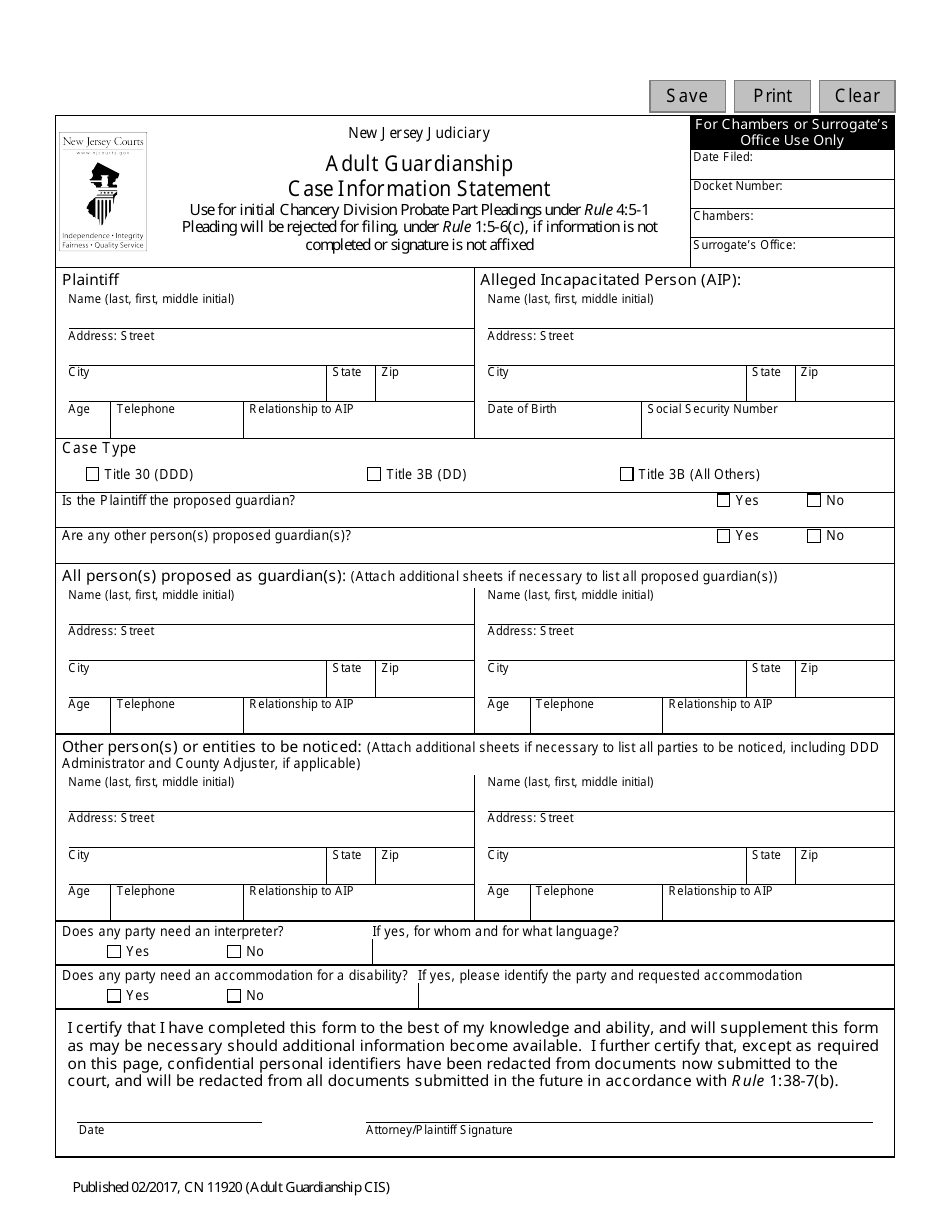
New Jersey’s Office of the Courts provides a standardized packet for most guardianship cases. While the exact documents can vary slightly by county, the following forms are almost always required.
- Petition for Guardianship (CJ‑140) – the initial request filed with the Superior Court, outlining why guardianship is necessary.
- Order of Appointment (CJ‑150) – the court’s formal decision naming the guardian.
- Inventory and Accounting (CJ‑210) – a detailed list of the protected person’s assets and liabilities, required once a guardian is appointed.
- Certificate of Service – proof that all interested parties have received copies of the petition.
- Affidavit of Merit – a sworn statement from a qualified professional (often a physician or psychologist) confirming the need for guardianship.
Many counties also require a short questionnaire about the proposed guardian’s background, plus a consent form if the person who will become the ward agrees to the arrangement.
Step‑by‑Step Process for Filing
Following a clear sequence can reduce delays and keep the court’s focus on the best interests of the protected individual.
- 1. Gather Documentation – collect medical records, financial statements, and any existing powers of attorney.
- 2. Complete the Petition – fill out CJ‑140, providing details about the person who needs protection and why a guardian is essential.
- 3. Secure the Affidavit of Merit – arrange for a licensed professional to evaluate the person’s capacity and sign the affidavit.
- 4. File with the Superior Court – submit the packet at the county clerk’s office, pay the filing fee (which varies by county), and receive a docket number.
- 5. Serve Interested Parties – use the Certificate of Service to notify close relatives, the person’s attorney (if any), and any other parties the court identifies.
- 6. Attend the First Hearing – the judge will review the petition, may ask clarifying questions, and decide whether to issue a temporary guardianship order.
- 7. Submit the Inventory and Accounting – within 30 days of appointment, the new guardian must file CJ‑210, giving the court a snapshot of the ward’s finances.
- 8. Follow Up with Periodic Reports – most judges require annual or semi‑annual updates on the ward’s well‑being and the guardian’s management of assets.
Common Pitfalls and Tips
Even seasoned applicants can stumble over small details that cause unnecessary setbacks. Here are a few practical pointers.
- Double‑check that every form is signed and dated; an unsigned petition will be rejected outright.
- When listing assets, be thorough. Omitting a bank account or a piece of real estate can raise questions about transparency.
- If the ward is capable of expressing a preference, obtain a written statement of consent. Courts often view cooperation as a positive factor.
- Keep copies of every document you file. The court may request the original paperwork for verification, and having backups speeds up any follow‑up.
Where to Find Help and Resources
Several organizations in New Jersey offer free or low‑cost assistance with guardianship filings.
- Legal Services of New Jersey – provides pro bono help for qualifying low‑income residents.
- New Jersey Office of the Public Guardian – offers guidance on the forms and can act as a guardian when no suitable family member is available.
- County Bar Associations – many run “lawyer‑referral” programs that match you with attorneys experienced in elder law or family law.
- Self‑Help Centers – located in most county courthouses, these centers have staff who can walk you through the paperwork.
Don’t hesitate to reach out early; a quick consultation can clarify whether you need full guardianship, a limited arrangement, or perhaps a less intrusive alternative such as a durable power of attorney.
FAQ
Do I need a lawyer to file NJ guardianship forms?
While it’s not mandatory, an attorney familiar with New Jersey’s probate court procedures can help avoid costly errors, especially in complex financial situations.
How long does the guardianship process usually take?
From filing the petition to receiving a temporary order, the timeline often spans 4‑6 weeks, depending on court caseload and the completeness of your documentation.
Can the guardianship be contested?
Yes. Interested parties, including relatives or the person subject to guardianship, may file objections, prompting a hearing where the court reviews all evidence before making a final decision.
What happens after the guardian is appointed?
The guardian must file an inventory of assets, submit regular reports to the court, and act in the ward’s best interest at all times. Failure to do so can lead to removal by the court.