How to Produce Enzymes Through Fermentation: A Step‑by‑Step Guide
Enzymes are the workhorses of industry, from detergents to biofuels. The most economical and scalable route to obtain them is by fermentative cultivation of microorganisms. This guide walks you through the essential stages, from choosing the right host to downstream purification, while highlighting common pitfalls and best practices.
Enzyme Production Via Fermentation
At its core, enzymatic fermentation is a bioprocess that turns inexpensive substrates—usually sugars, molasses, or agricultural by‑products—into a living cell culture that secretes or stores the target protein. The process can be tailored to secreted enzymes, intracellular enzymes harvested after cell lysis, or enzymes displayed on the cell surface for direct use.
1. Selecting the Microbial Host
- Bacterial systems such as Escherichia coli or Bacillus subtilis grow fast, are well‑characterized, and are ideal for enzymes that don’t require extensive post‑translational modifications.
- Yeasts, especially Saccharomyces cerevisiae and Yarrowia lipolytica, provide glycosylation capabilities and tolerate higher osmotic pressures.
- Filamentous fungi like Trichoderma reesei excel at secreting large amounts of cellulases and hemicellulases directly into the medium.
Choose a host that matches the enzyme’s folding requirements, secretion pathway, and production scale.
2. Designing the Expression Vector
Key elements:
- Promoter strength—strong constitutive promoters (e.g., pLac) or inducible systems (e.g., pTet) provide control over expression timing.
- Signal peptide for secretion; Saccharomyces often uses the α‑factor prepro sequence.
- Selection marker (antibiotic resistance or auxotrophy) ensures plasmid maintenance.
- Optional fusion tags (His, GST) aid downstream purification.
3. Preparing the Inoculum
Start with a fresh, healthy overnight culture grown in a minimal medium. Harvest cells by centrifugation, resuspend in fresh medium, and adjust the optical density to the desired starting point (typically OD600 ≈ 0.2–0.5). A healthy inoculum ensures reproducible growth and enzyme induction.
4. Media Selection and Composition
Balancing carbon, nitrogen, and trace elements is critical. Common media:
- Rich media (LB, YPD) are quick to set up but can dilute enzyme concentration.
- Defined media (M9, minimal salts) allow precise control over nutrient levels and reduce downstream impurities.
- Cost‑effective substrates such as corn steep liquor, whey permeate, or sugarcane molasses provide cheap nitrogen and carbon sources while supporting high biomass yield.
Adjust pH to the optimum of the host (usually 5.5–7.0) and maintain it with automated pH controllers.
5. Fermentation Conditions
Key parameters to monitor:
- Temperature—most bacterial fermentations run at 37 °C, while yeast processes often use 30 °C.
- Stirring speed and aeration—adequate dissolved oxygen is essential for aerobic enzymes; spargers and impellers should be chosen to match the microbial oxygen demand.
- Induction timing—for inducible promoters, add IPTG or anhydrotetracycline when the culture reaches mid‑log phase.
- Monitor optical density, substrate consumption, and enzyme activity at regular intervals to determine the optimal harvest window.
6. Harvesting and Downstream Processing
Depending on enzyme location:
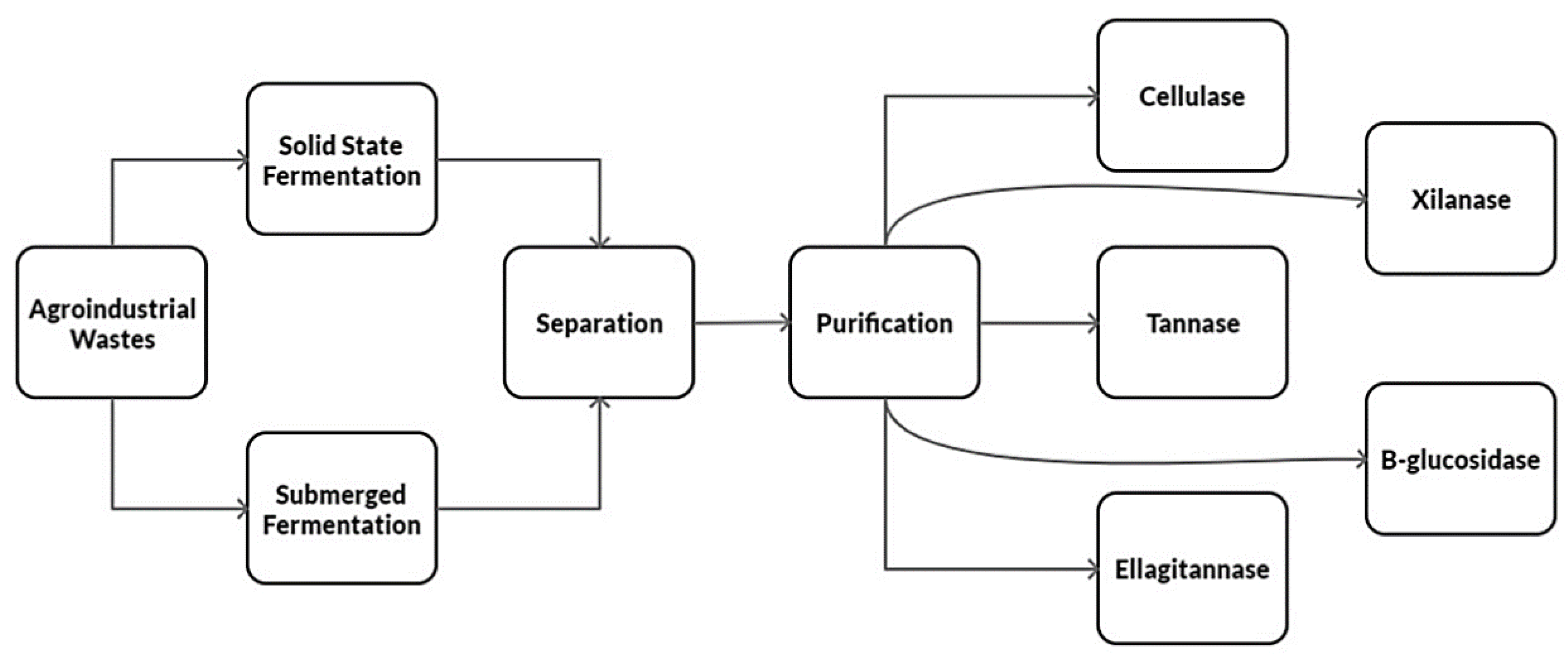
- Secretion—clarify the broth by centrifugation or microfiltration, then concentrate via ultrafiltration.
- Intracellular—break cells using homogenization, sonication, or enzymatic lysis, followed by centrifugation to remove cell debris.
Purification steps typically involve:
- Ion‑exchange chromatography to remove charged impurities.
- Hydrophobic interaction chromatography for enzymes with surface hydrophobic patches.
- Size‑exclusion chromatography as a polishing step.
Final polishing may include diafiltration to adjust buffer composition and concentration.
7. Quality Control and Activity Assays
Validate the product through:
- Western blotting or ELISA to confirm the presence of the enzyme.
- Specific activity assays (e.g., pNP‑glycosidase assay for β‑glucosidase).
- Stability tests across temperature, pH, and storage conditions.
Document all parameters to ensure batch consistency and regulatory compliance.
8. Scaling Up: From Lab to Pilot Plant
Transitioning to larger bioreactors introduces new variables:
- Ensure proper mixing to avoid dead zones.
- Use scalable aeration strategies, such as membrane aerators or oxygen‑enriched gas streams.
- Implement real‑time monitoring of pH, dissolved oxygen, and metabolite profiles using process analytical technology (PAT).
Perform a pilot run to fine‑tune feed strategies and control loops before committing to full production.
9. Common Pitfalls and How to Avoid Them
- Protein aggregation—overexpression can saturate the folding machinery. Use chaperone co‑expression or lower induction levels.
- Contamination—maintain strict aseptic techniques and include antibiotics or antibiotics‑free systems with selection markers.
- Low secretion efficiency—screen multiple signal peptides or switch to a secretion‑friendly host.
- Product instability—add protease inhibitors or optimize storage buffers early in the process.
10. Emerging Trends in Enzymatic Fermentation
Advances that are reshaping the field include:
- CRISPR‑Cas editing for precise genomic integration and metabolic pathway optimization.
- Use of synthetic biology tools to build modular enzyme libraries with tunable expression.
- Application of metabolic flux analysis to redirect carbon streams toward enzyme biosynthesis.
- Development of continuous fermentation systems that recycle biomass and reduce downtime.
By staying abreast of these innovations, producers can increase yields, reduce costs,