How to Use a Free Sweat Equity Partnership Agreement Template
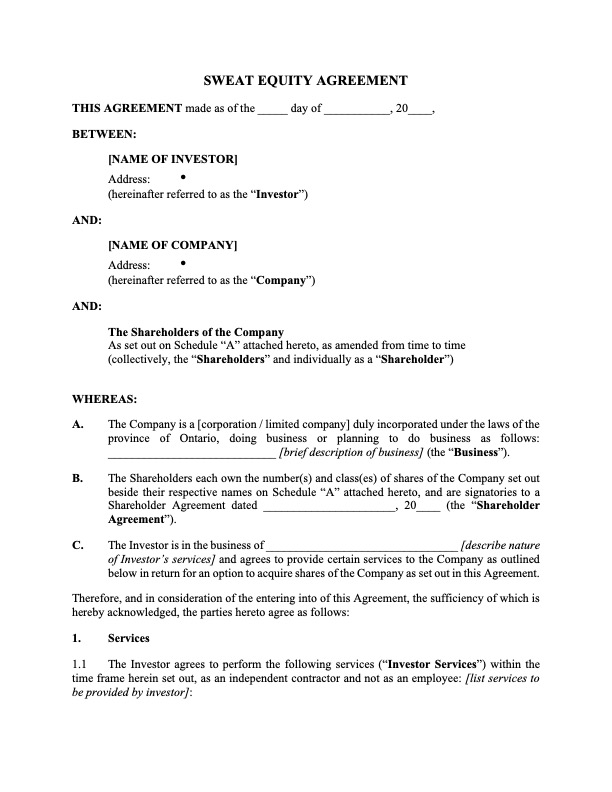
If you’re a founder, designer, or coder looking to bring a new partner on board without an upfront cash outlay, a free sweat equity partnership agreement template can save time and clarify expectations. These documents outline ownership splits, responsibilities, and exit options—essentially turning unpaid effort into a share of the company’s future success.
What Is Sweat Equity and Why It Matters
Sweat equity is the value added by a partner’s labor rather than a monetary investment. In early-stage ventures, cash is scarce, so founders often compensate key contributors with equity. Properly documented, sweat equity prevents misunderstandings about ownership percentages, vesting schedules, and future payouts, safeguarding both parties as the business grows.
Key Elements of a Sweat Equity Partnership Agreement
- Scope of Work – Clearly define the roles, tasks, and deliverables the partner will handle.
- Equity Allocation – Specify the percentage of ownership granted, including any conditions tied to milestones.
- Vesting Schedule – Outline the period over which equity becomes fully owned, often with a cliff to protect the company if a partner leaves early.
- Intellectual Property – Detail who owns the work produced and how it can be used.
- Exit Strategy – Describe how a partner may exit and how their equity will be valued or repurchased.
- Dispute Resolution – Provide a mechanism for resolving disagreements, such as mediation or arbitration.
Downloading and Customizing Your Free Template
Most reputable startup resource sites host a variety of free templates. Once you’ve chosen one:
- Replace placeholder names with the real legal names and addresses of all parties.
- Adjust the equity percentages to reflect agreed splits.
- Insert a realistic vesting schedule—common choices are 4‑year vesting with a 1‑year cliff.
- Include any non‑compete or confidentiality clauses that suit the industry.
- Proofread for consistency, then have each party sign in the presence of a witness or notary if local law requires it.
Common Pitfalls to Avoid When Using a Free Template
- Ignoring Legal Jurisdictions – Templates are generic; tailor them to the state or country where your business is incorporated.
- Overlooking Vesting Details – A missing cliff can leave the company vulnerable if a key contributor exits early.
- Not Addressing IP Ownership – Without a clear clause, later disputes over patents, designs, or code can derail progress.
- Neglecting Exit Provisions – Without a buy‑out formula, disagreements over future ownership can become costly.
When to Seek Legal Counsel Despite the Free Template
Even a well‑crafted free template has limits. If your venture deals with:
- Significant regulatory or compliance requirements (e.g., medical devices, fintech).
- Complex IP portfolios or joint‑development agreements.
- Substantial future funding rounds where investor terms will heavily influence ownership.
Consulting a lawyer can ensure the agreement withstands scrutiny and protects your interests.
Examples of Situations Where the Template Works Best
- A tech startup hiring a senior engineer in exchange for 5% equity, with a 3‑year vesting schedule.
- A marketing firm bringing on a freelance strategist who will contribute to brand strategy and receives a 2% equity stake.
- A boutique design studio partnering with a consultant to co‑develop a product line, documented with a 1‑year cliff vesting.
FAQs About Free Sweat Equity Partnership Templates
- What if the partner is a non‑resident? Ensure the agreement includes clauses addressing international tax implications and residency status.
- Can I update the template after signing? Yes, but both parties must agree to amendments in writing and re‑sign the document.
- Is a notary required? Not always, but notarizing the signatures can add an extra layer of enforceability, especially in larger jurisdictions.
- How do I determine the fair equity value? Base it on the partner’s contribution relative to company valuation, often using industry benchmarks or a professional valuation.