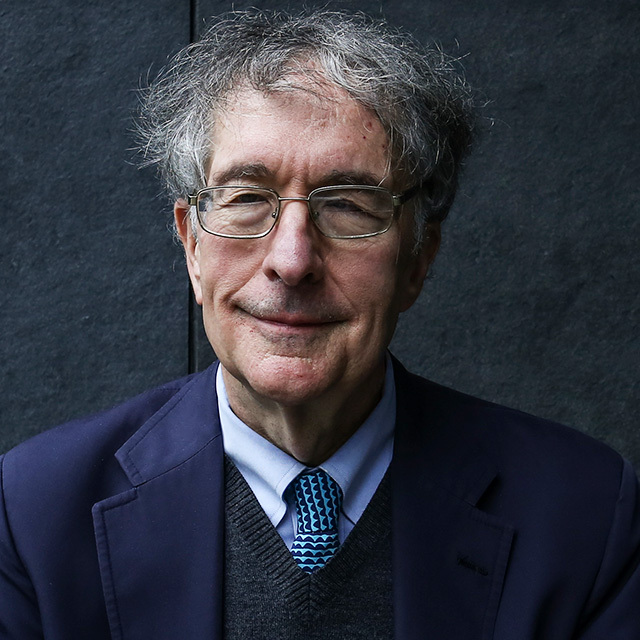
Howard Gardner’s Theory: Why Education Can’t Be One‑Size‑Fits‑All
Howard Gardner’s groundbreaking theory of multiple intelligences argues that education can’t be OneSizeFitsAll. The idea that a single curriculum or assessment method can serve every learner has been the default in many schooling systems, yet Gardner’s research shows that our brains and talents are far more varied than a one‑size mold can hold. In this article we unpack how his insights challenge conventional schooling and explore practical ways schools can honor individual differences.
Gardner’s Roots: From Brain to Classroom
Gardner, a psychologist and professor at Harvard, first introduced the concept of multiple intelligences in his 1983 book Frames of Mind. He argued that intelligence is not a single, monolithic trait but a collection of distinct modalities—linguistic, logical‑mathematical, spatial, musical, bodily‑kinesthetic, interpersonal, intrapersonal, naturalist, and later, existential. These categories emerged from neuropsychological studies of patients with selective brain damage, revealing that impairments could isolate specific types of thinking without affecting others. This finding laid the foundation for rethinking how we measure and nurture intelligence.
Multiple Intelligences: A Blueprint for Diversity
Gardner’s model shifts the focus from IQ scores to a spectrum of strengths. A child may excel in language arts while struggling with abstract algebra, or a student might be a natural musician but find spatial reasoning challenging. By mapping these talents, educators can design learning experiences that play to each child’s unique profile. The core message is clear: no single test or lesson plan can capture the full range of human potential.
For instance, a lesson on ecosystems could combine hands‑on experiments for bodily‑kinesthetic learners, mapping activities for spatial thinkers, and songwriting for musical minds. In practice, this means diversifying instruction and assessment methods so that every student finds an entry point to success.
Beyond Standardized Testing
Standardized exams, prized for their efficiency and comparability, often favor linguistic and logical‑mathematical intelligences. Gardner critiqued this bias, noting that such tests can marginalize students whose strengths lie elsewhere. He also highlighted the social consequences: when only one set of abilities is rewarded, others are left feeling invisible or undervalued.
Research has shown that test‑centric approaches can exacerbate achievement gaps. Conversely, classrooms that incorporate multiple intelligences demonstrate higher engagement, reduced dropout rates, and broader skill development. These outcomes suggest that moving away from a one‑size assessment model can benefit both individuals and society.
Practical Paths to a More Inclusive Curriculum
Adapting the classroom to multiple intelligences involves several concrete steps:
- Assessment Variety: Offer projects, oral presentations, visual portfolios, and peer reviews alongside traditional quizzes.
- Differentiated Instruction: Group students by interest or skill rather than by ability level, and tailor tasks to fit diverse learning styles.
- Technology Integration: Use adaptive learning platforms that adjust content pace and format based on real‑time data.
- Professional Development: Train teachers in identifying and cultivating varied intelligences, ensuring they can design lessons that reach all students.
Implementing these strategies does not require a complete overhaul. Even small changes—like adding a science fair component or a music‑in‑science module—can create a ripple effect, allowing more students to shine.
Challenges and Criticisms
Despite its appeal, Gardner’s theory faces critique. Some scholars argue that the intelligences overlap too much, making them difficult to delineate clearly. Others point to a lack of rigorous, large‑scale empirical evidence linking multiple intelligences to measurable academic outcomes. Critics also warn that the model can be misused, with teachers labeling students too early and limiting their growth.
Nevertheless, the practical benefits of a flexible, student‑centered approach are evident. When schools adopt even a partial embrace of diversity, they foster resilience and curiosity—qualities that standardized tests alone cannot cultivate.
Future Directions
Education systems worldwide are increasingly exploring competency‑based and personalized learning frameworks that echo Gardner’s vision. Emerging technologies—such as artificial intelligence‑driven analytics and immersive virtual environments—offer unprecedented tools to tailor instruction. However, these innovations must be guided by a deep understanding of human learning diversity, lest we fall back into a new one‑size paradigm.
In the end, Gardner’s insight remains a clarion call: to unlock every child’s potential, we must reject the notion that education can fit every learner into the same template