India’s Rocketry Trailblazers: A Historic Journey
When the Indian subcontinent first looked up at the night sky, curiosity sparked more than wonder—it ignited a quest to reach the stars. The story of India’s rocket program is a tapestry woven from scientific ambition, political will, and a handful of visionary individuals whose names echo in every launch pad today.
The Birth of India’s Rocketry Vision
In the early 1950s, a young physicist named Vikram Sarabhai began advocating for a space research program, arguing that satellite data could transform agriculture, weather forecasting, and national defense. His proposal found a receptive audience in Prime Minister Jawaharlal Nehru, who earmarked a modest budget for the fledgling Indian National Committee for Space Research (INCOSPAR) in 1962.
While INCOSRAR’s resources were limited, Sarabhai’s belief that “space technology is not a luxury but a necessity” set the tone for a pragmatic, home‑grown approach. He recruited engineers from diverse backgrounds, laying the groundwork for what would soon become the Indian Space Research Organisation (ISRO).
Pioneering Minds Who Shaped the Skyward Dream
Beyond Sarabhai, several key figures emerged as the true architects of India’s rocket capabilities:
- Satish Dhawan—Sarabhai’s successor, who steered ISRO through its formative years, championing indigenous development and fostering a culture of “fail fast, learn faster.”
- A. P. J. Abdul Kalam—later known as the “Missile Man,” his work on the Integrated Guided Missile Development Programme (IGMDP) overlapped with early launch vehicle research, bridging defense and space ambitions.
- Udupi Ramachandra Rao—instrumental in establishing the Satellite Communications Centre, paving the way for India’s first communication satellite.
These leaders shared a common ethos: progress must be achieved with what India had at hand, not by importing expensive foreign technology.
From Sounding Rockets to the First Satellite
India’s inaugural foray into rocketry began with modest sounding rockets supplied by the British firm Bristol Aerojet. The launches from Thumba Equatorial Rocket Launching Station (TERLS) in Kerala demonstrated basic trajectory control and provided invaluable data on atmospheric physics.
Building on this foundation, ISRO designed and built the Aryabhata satellite, named after the ancient Indian astronomer. Launched aboard a Soviet Kosmos‑3M in 1975, Aryabhata marked India’s entry into the exclusive club of space‑faring nations. Though the satellite’s mission was short‑lived, the experience proved that Indian engineers could design, test, and operate a space‑grade system.
The SLV‑3 Era: India’s First Indigenous Launch Vehicle
Transitioning from reliance on foreign rockets to self‑reliance was a monumental leap. The Satellite Launch Vehicle‑3 (SLV‑3) project, initiated in the early 1980s, embodied this shift. Under Dhawan’s guidance, a team of engineers tackled challenges ranging from solid‑propellant formulation to guidance computer miniaturization.
After several setbacks, the SLV‑3 successfully placed the Rohini RS‑1 satellite into orbit on July 18 1980. The launch, though modest by today’s standards—a payload of just 35 kg—signaled that India could build and launch its own rockets, a milestone that bolstered national confidence and attracted international collaborations.
Key Technological Milestones
- Development of the Vikas engine, a liquid‑propellant engine that remains the workhorse of ISRO’s launchers.
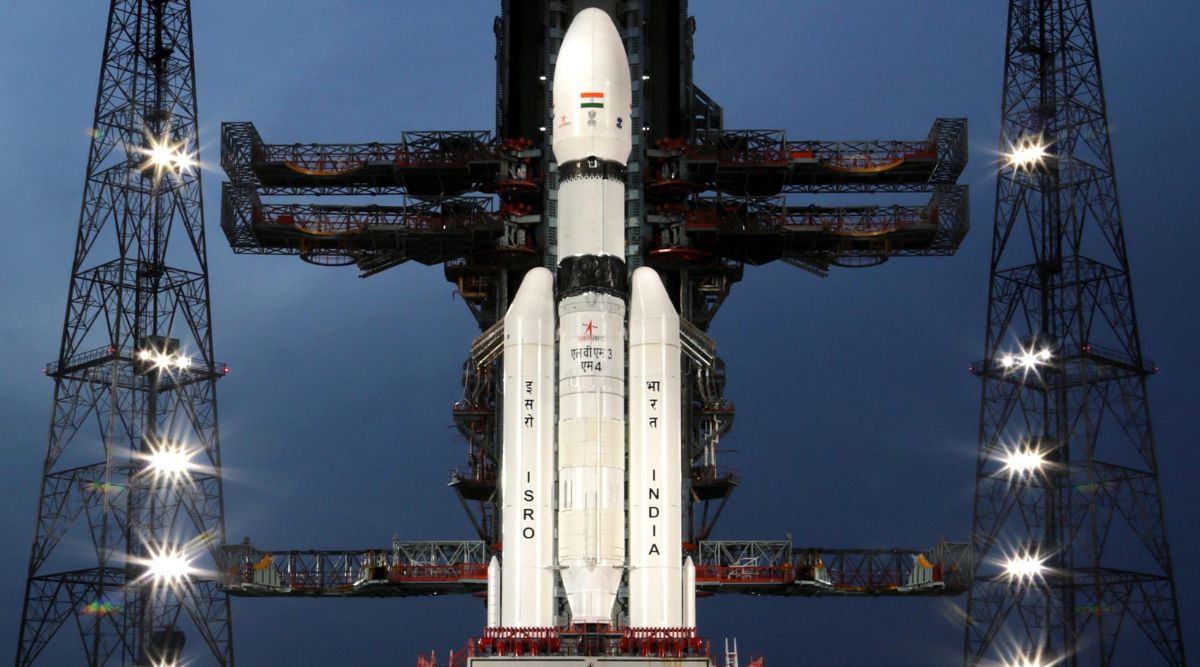
- Creation of indigenous cryogenic technology, culminating in the GSLV‑Mk III capable of delivering heavy payloads to geostationary orbit.
- Adoption of modular design principles, allowing faster iteration and cost reductions across the launch vehicle family.
Expanding Horizons: Chandrayaan, Mangalyaan, and Beyond
The turn of the millennium saw India’s rocket pioneers transitioning from launch vehicle mastery to ambitious interplanetary missions. The Chandrayaan‑1 lunar orbiter, launched in 2008, confirmed the presence of water molecules on the Moon’s surface—a discovery that reshaped scientific discourse worldwide.
Just three years later, Mangalyaan (Mars Orbiter Mission) took the world by surprise. Using a remarkably frugal budget of around $74 million, ISRO placed a spacecraft in Martian orbit on its first attempt, a feat that earned global admiration for its ingenuity and cost‑effectiveness.
These successes were not isolated triumphs; they were the cumulative result of decades of mentorship, iterative engineering, and a steadfast belief that “the sky is not the limit, but a stepping stone.”
Today's Rocketry Landscape and Future Aspirations
Modern India boasts a diversified launch fleet: the Polar Satellite Launch Vehicle (PSLV) for Earth observation, the Geosynchronous Satellite Launch Vehicle (GSLV) for communication satellites, and the upcoming Reusable Launch Vehicle (RLV) program, which aims to emulate the cost‑saving benefits of reusable technology pioneered elsewhere.
Beyond hardware, a vibrant ecosystem of private firms—such as Skyroot Aerospace and AgniKul Cosmos—is emerging, promising to inject fresh capital and novel ideas into the sector. The government’s National Space Promotion and Authorization Center (NSPAC) now streamlines licensing, encouraging startups to contribute to the nation’s space ambitions.
Looking ahead, ISRO’s roadmap includes manned missions under the Gaganyaan program, a second lunar lander, and even a potential mission to Venus. Each objective builds on the foundation laid by the early pioneers, demonstrating that the spirit of innovation remains as vital as ever.
FAQs
Who is considered the “father of India’s space program”?
Vikram Sarabhai is widely recognized as the architect of India’s space endeavors, having founded INCOSPAR and championed the nation’s first satellite initiatives.
What was India’s first successful indigenous launch vehicle?
The Satellite Launch Vehicle‑3 (SLV‑3) achieved the first indigenous orbital launch on July 18 1980, placing the Rohini RS‑1 satellite into orbit.
How did India manage to keep the Mars mission budget so low?
Mangalyaan leveraged existing technology, minimized ground‑support infrastructure, and employed a lean project management style that emphasized frugality without compromising mission safety.
What role do private companies play in India’s current rocket development?
Private firms are developing small‑sat launchers and propulsion systems, fostering competition, and helping accelerate the transition toward reusable and cost‑effective launch solutions.