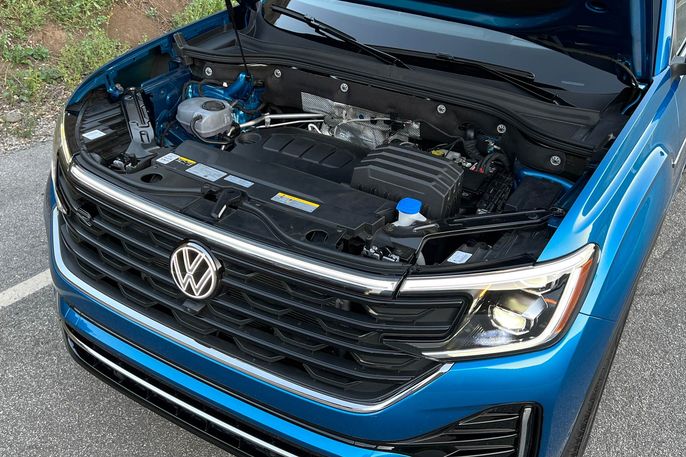
Inside the 2024 VW Atlas Cross Sport Engine
Engine Options and Core Specs
The 2024 VW Atlas Cross Sport arrives with two powerplants that cater to different driving moods. The base model relies on a 2.0‑liter turbocharged inline‑four, delivering roughly 235 horsepower and about 258 lb‑ft of torque. For those craving a bit more grunt, a 3.6‑liter V6 pushes the output to around 276 horsepower and 266 lb‑ft of torque. Both engines are paired with VW’s eight‑speed automatic, which balances smooth shifts with brisk acceleration.
Fuel‑economy estimates hover near 21 mpg city and 27 mpg highway for the four‑cylinder, while the V6 trails a few points lower, typically around 19 mpg city and 25 mpg highway. Those numbers reflect EPA testing; real‑world results can vary based on driving style, load, and terrain.
How the Turbocharged Four‑Cylinder Works
The 2.0‑liter unit is a modern iteration of VW’s EA888 family. A single twin‑scroll turbocharger sits atop the exhaust manifold, helping the engine reach its peak torque as early as 1,800 rpm. Direct injection supplies a precise fuel spray, while a variable‑valve timing (VVT) system on both the intake and exhaust cams smooths power delivery across the rev range.
Because the turbo is relatively small, there’s less lag than you might expect from a larger forced‑induction setup. In everyday driving, you’ll notice a gentle surge when you lift off the throttle, making city commuting feel more responsive without sacrificing efficiency.
What Makes the V6 Distinct
The 3.6‑liter V6 is a naturally aspirated engine that leans on a more traditional architecture. It employs a cast‑iron block with aluminum heads, and a double overhead cam (DOHC) layout that revs comfortably to 6,500 rpm. While it lacks the instant torque punch of the turbo, the V6 provides a linear power curve that many drivers find reassuring, especially when hauling a full cabin or climbing steep grades.
One noteworthy feature is the integrated exhaust manifold, which reduces weight and improves heat dissipation. Combined with a variable‑geometry intake system, the V6 maintains respectable efficiency for its displacement, though it can’t match the four‑cylinder’s fuel‑saving credentials.
Transmission Pairing and Drive Modes
The eight‑speed automatic is tuned to complement both engines. In normal mode, shifts are seamless, prioritizing comfort. Selecting the “Sport” mode holds gears longer, raising engine RPMs before each upshift and delivering a more engaging feel—particularly noticeable with the V6.
All Atlas Cross Sport models come with front‑wheel drive as standard, while an all‑wheel‑drive (AWD) package is optional. The AWD system is an on‑demand setup that routes torque to the rear wheels only when slip is detected, preserving fuel economy during steady cruising.
Emissions and Future‑Proofing
Both powerplants meet Euro 6d‑Temp standards, thanks to a combination of selective catalytic reduction (SCR) and a gasoline particulate filter (GPF) on the turbocharged engine. VW has also introduced a mild‑hybrid assist on the 2.0‑liter variant for the 2024 model year, which employs a 48‑volt belt‑integrated starter‑generator. This system recovers kinetic energy during braking and can provide a brief torque boost during acceleration, nudging fuel consumption lower by roughly 1‑2 percent.
Performance in Real‑World Driving
When put to the test on a typical suburban road, the four‑cylinder Atlas Cross Sport feels nimble enough to merge onto highways without hesitation. The turbo’s low‑end torque eliminates the need for frequent downshifts, making highway cruising feel relaxed.
The V6, on the other hand, shines when the vehicle is fully loaded. With three rows of seats occupied and a couple of suitcases in the cargo area, the extra horsepower and a broader torque band keep acceleration steady, especially on inclines.
Maintenance Considerations
- Oil Changes: VW recommends synthetic oil with a change interval of 10,000 miles or 12 months, whichever comes first.
- Turbo Care: For the 2.0‑liter engine, allow the engine to idle for a minute after hard stops to let the turbo cool, which can extend its lifespan.
- Timing Belt vs. Chain: Both engines use a timing chain, reducing the need for periodic replacement typical of older belt‑driven designs.
- Software Updates: VW frequently releases ECU updates that refine fuel mapping and turbo response; owners should schedule these during routine service visits.
What Buyers Should Weigh
If fuel economy and lower ownership costs top your list, the 2.0‑liter turbo is the logical pick. Its modest displacement, combined with mild‑hybrid assistance, delivers respectable mileage without a dramatic sacrifice in power.
Conversely, if you often travel with the full complement of passengers or need that extra push for overtaking, the V6’s consistent output may feel more reassuring. Keep in mind the slight fuel‑economy penalty and potentially higher insurance premiums.
FAQ
Q: Does the 2024 Atlas Cross Sport offer a manual transmission?
A: No. All trims are equipped exclusively with VW’s eight‑speed automatic; a manual option is not available for this model year.
Q: How does the mild‑hybrid system affect the driving experience?
A: The 48‑volt system operates mostly behind the scenes, smoothing out start‑stop transitions and providing a subtle torque boost during initial acceleration, which can make city driving feel a bit more effortless.
Q: Are there any notable differences in warranty coverage between the two engines?
A: Both powerplants fall under VW’s standard 4‑year/50,000‑mile bumper‑to‑bumper warranty, with a 6‑year/70,000‑mile powertrain guarantee that includes the engine, transmission, and drivetrain components.