Mastering the Essentials of RISC Computer Architecture
What Makes RISC Different?
RISC computer architecture—standing for Reduced Instruction Set Computing—focuses on a small, highly optimized set of instructions. Instead of trying to do everything in one complex opcode, RISC designs break tasks into simpler steps that the processor can execute quickly. This philosophy emerged as a response to the growing difficulty of squeezing more performance out of increasingly intricate instruction sets.
Historical Roots and Evolution
The RISC idea took shape in the late 1970s at institutions like IBM and Stanford, where researchers noticed that most programs used only a fraction of the available CISC instructions. Early prototypes such as the IBM 801 and the Stanford MIPS processor proved that a leaner instruction set could deliver higher clock speeds and better pipeline efficiency. Over the decades, the concept matured into mainstream powerhouses like ARM and the open‑source RISC‑V.
Core Principles of RISC Design
Three ideas sit at the heart of every RISC implementation:
- Load/store simplicity – Only load and store instructions interact directly with memory; all arithmetic and logic happen on registers.
- Fixed‑length instructions – Each instruction occupies the same number of bytes, typically 32, which eases decoding and enables rapid pipelining.
- Limited addressing modes – RISC processors favor straightforward register‑direct or immediate addressing, avoiding the complex modes that slow down CISC pipelines.
These constraints keep the hardware logic straightforward, which in turn reduces power consumption and boosts predictability.
Why Simplicity Helps Performance
When an instruction set is minimal, the CPU can fetch, decode, and execute each operation in a single clock cycle. This uniform timing makes it possible to line up multiple stages—fetch, decode, execute, memory, write‑back—in a deep pipeline without frequent stalls. The result is a higher instruction‑per‑second throughput, especially for code that can be heavily optimized by compilers.
Comparing RISC and CISC
While RISC strips down the instruction palette, CISC (Complex Instruction Set Computing) packs many operations into single, variable‑length opcodes. CISC can reduce the number of instructions a programmer writes, but the hardware must spend extra cycles decoding and handling those varied formats. Modern processors blur the line: many “CISC” chips, like Intel’s x86, internally translate complex instructions into RISC‑style micro‑operations to reap similar pipeline benefits.
Real‑World RISC Architectures
Several families illustrate how the RISC philosophy adapts to different markets:
- ARM – Dominates mobile and embedded devices thanks to its energy‑efficient cores and extensive ecosystem.
- MIPS – Historically popular in routers and digital TVs, now finds niche use in academic settings.
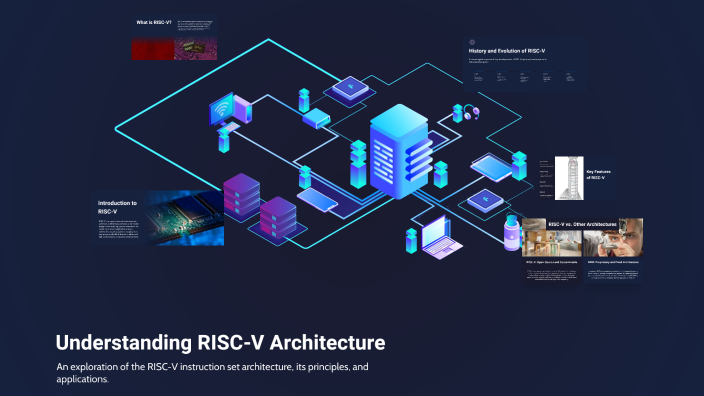
- RISC‑V – An open, royalty‑free ISA that’s gaining traction across everything from IoT chips to high‑performance servers.
Each adheres to the same basic tenets—simple instructions, load/store focus, and regular encoding—while adding optional extensions for floating‑point, vector processing, or security.
Design Trade‑offs to Consider
Choosing a RISC core isn’t a silver bullet. The reduced instruction set can lead to larger binary sizes, since more instructions may be needed to accomplish a task that a single CISC opcode could handle. However, modern compilers are adept at minimizing this overhead, and the gains in speed and power often outweigh the extra code.
Another factor is ecosystem support. While RISC‑V’s open model encourages rapid innovation, developers may still rely on mature toolchains and libraries that have existed longer for ARM or x86. The decision often hinges on the target device’s power budget, performance goals, and long‑term maintenance plans.
Future Directions for RISC
RISC designs continue to evolve toward heterogeneous computing. Chip makers are integrating specialized accelerators—AI tensors, cryptographic modules—directly alongside the general‑purpose core, all sharing the same simple instruction encoding. At the same time, the open‑source momentum behind RISC‑V is spurring community‑driven extensions that address emerging needs without waiting for a single corporate roadmap.
FAQ
What does “load/store” mean in a RISC context? It refers to the rule that only explicit load and store instructions may access memory; all other operations work solely on registers.
Can a RISC processor run legacy CISC software? Typically not directly; however, many modern CPUs include translation layers that convert CISC instructions into RISC‑style micro‑operations.
Is RISC‑V really free to use? Yes, the ISA is open and royalty‑free, though you may still pay for specific core implementations or development tools.

.jpg)