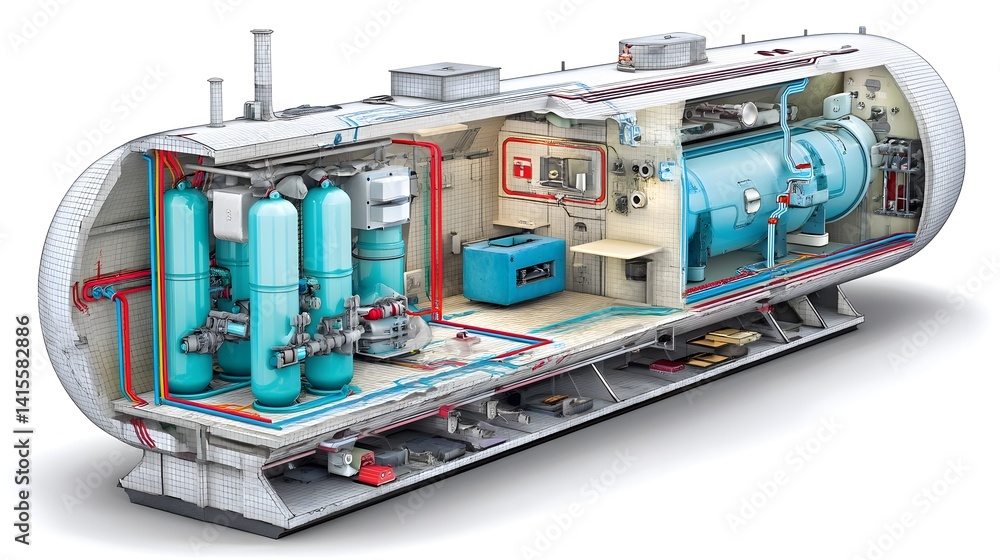
Submarines Keep Breathing: Inside Ocean‑Depth Oxygen Systems
When a crew goes beneath the waves, their lifeline is not the hull but the air they breathe. Submarine oxygen systems are the unsung heroes that keep sailors alive, calm, and mission‑ready in environments where any mistake can be fatal. This article explores how those systems work, the technology that powers them, and what the future might hold for underwater breathing.
Why Submarine Oxygen Systems Matter
Submarines operate in a world where pressure rises by one atmosphere for every 10 meters of depth. At those pressures, the human body tolerates only a narrow range of gas composition. An adequate supply of oxygen and the removal of carbon dioxide are paramount, or the crew faces hypoxia, hypercapnia, or even decompression sickness. Submarine oxygen systems ensure that the air remains breathable regardless of how long a mission lasts.
The Basics: Oxygen, CO₂, and Pressure
Oxygen is essential for cellular respiration, but it also reacts with water and other materials under high pressure, creating hazardous conditions if not managed. Carbon dioxide, a waste product of respiration, accumulates quickly in a sealed environment and can depressurize the crew’s cognitive function. The balance between oxygen and CO₂ is maintained by a combination of oxygen supply and CO₂ scrubbing.
Key Components of a Submarine Oxygen System
- Oxygen Tanks – High‑pressure vessels that store pure oxygen or a mixture like 100 % oxygen or a breathable blend.
- CO₂ Scrubbers – Chemical absorbents, commonly lithium hydroxide or soda lime, that remove CO₂ from exhaled air.
- Gas Sensors – Continuous monitors that measure O₂ and CO₂ levels, triggering alarms or automatic adjustments.
- Redundant Supply Lines – Backup pipelines and pumps that ensure oxygen delivery even if a primary line fails.
- Ventilation Fans – Maintain uniform air distribution and prevent localized pockets of toxic gases.
- Emergency Oxygen Kits – Portable units that crew can use in case of system failure or when a compartment is isolated.
How They Operate
Submarine oxygen systems come in two principal configurations: closed‑loop and semi‑closed. Each has trade‑offs between resource consumption, complexity, and reliability.
Closed‑Loop Systems
In a closed‑loop system, the air is recirculated. Oxygen is replenished by adding fresh gas, while CO₂ is absorbed by scrubbers. The system strives to keep the air composition constant, minimizing waste. This method is common in nuclear submarines and advanced research vessels because it allows for extended missions.
Semi‑Closed Systems
Semi‑closed designs introduce small amounts of fresh air from external sources, such as compressed air or a dedicated supply. The CO₂ levels are still scrubbed, but the system relies on periodic ventilation to remove excess nitrogen. This approach reduces the load on scrubbers and can simplify maintenance.
Modern Innovations
Technological advances have pushed submarine oxygen systems toward greater efficiency and autonomy.
Electrolysis and Regenerative Life Support
Recent prototypes use electrolysis to split seawater into hydrogen and oxygen. The oxygen is then fed directly into the breathable mix, while hydrogen can be vented or stored for other uses. This method reduces dependency on stored gas and allows for potentially unlimited oxygen generation, provided the power source—usually nuclear or diesel‑electric—remains operational.
Alternative Gas Sources
Some research vessels experiment with gas mixtures that include argon or xenon in low concentrations to reduce the risk of oxygen toxicity under high pressure. Additionally, bio‑reactive systems that employ algae or cyanobacteria to photosynthesize oxygen have been