Understanding ISDA Interest Rate Swaps in Plain Terms
What Are ISDA Interest Rate Swaps?
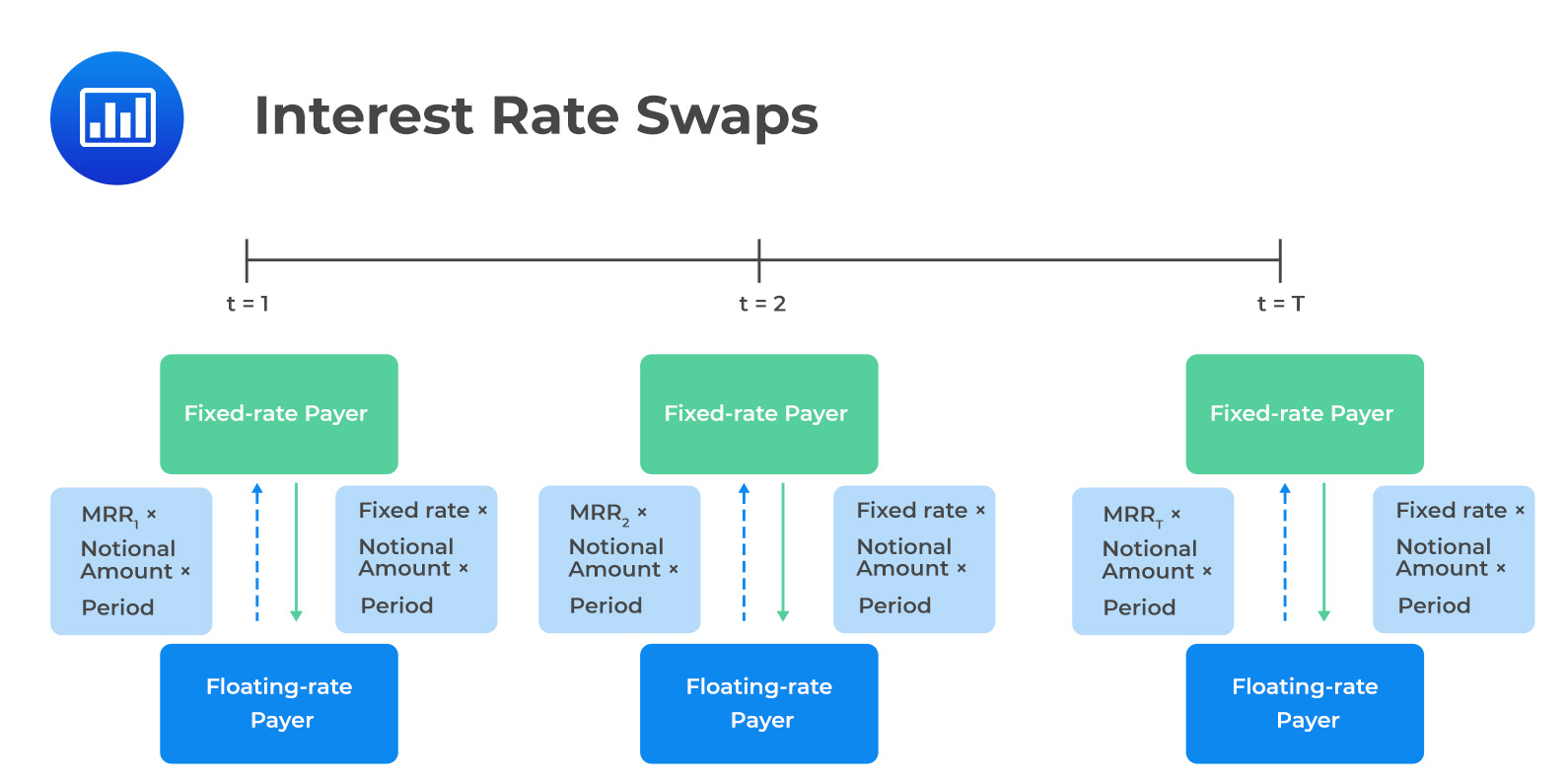
At their core, an ISDA interest rate swap is a contractual agreement where two parties exchange streams of cash based on different interest‑rate benchmarks. One side might pay a fixed rate while receiving a floating rate tied to, say, LIBOR or SOFR, and the other side does the opposite. The International Swaps and Derivatives Association (ISDA) provides the standardized legal framework that makes these exchanges reliable across borders and market participants.
The Role of the ISDA Master Agreement
The ISDA Master Agreement is the backbone of virtually every OTC derivative transaction. It sets out the general terms—governing law, events of default, netting, and collateral—so that each individual swap can be documented quickly with a simple schedule, or “confirmation,” that plugs into the master contract. This separation of “global” terms from “transaction‑specific” details reduces negotiation time and limits legal uncertainty.
Why Companies Use Interest Rate Swaps
Businesses often have exposure to interest‑rate fluctuations that can erode profit margins. A corporation with a floating‑rate loan, for example, might fear rising rates. By entering a swap and paying a fixed rate while receiving the floating rate it already owes, the firm effectively locks in a predictable interest cost.
Conversely, an institution that has issued fixed‑rate debt may seek floating‑rate exposure to benefit from a declining rate environment. Swaps thus become a flexible tool for aligning cash‑flow timing, managing balance‑sheet risk, and even taking speculative positions when market views shift.
Key Components of a Swap Confirmation
- Notional amount: The reference principal on which interest calculations are based; it never changes hands.
- Tenor: The length of the contract, often ranging from one to ten years, though bespoke structures exist.
- Fixed rate: The agreed‑upon percentage the payer will deliver each period.
- Floating index: The benchmark (e.g., SOFR, EURIBOR) used to determine the variable leg, typically reset quarterly or semi‑annually.
- Payment frequency: Determines how often cash flows are exchanged—common cycles are monthly, quarterly, or annually.
Valuation and Mark‑to‑Market
Because interest rates move, the fair value of a swap fluctuates daily. Market participants calculate a “mark‑to‑market” (MTM) value by discounting the expected future cash flows using current yield curves. If the MTM is positive for one party, that party would receive collateral under the ISDA Credit Support Annex (CSA), reducing counter‑party risk.
The shift from LIBOR to risk‑free rates (RFRs) such as SOFR has introduced “fallback” language into many new confirmations. This ensures that, should the original benchmark become unavailable, the contract can seamlessly transition to an agreed‑upon alternative without renegotiation.
Risk Considerations
While swaps can hedge risk, they also embed new exposures. Credit risk is the most prominent: if the counter‑party defaults, the surviving party may lose the expected cash flows. The CSA mitigates this by requiring posted collateral, but sudden market moves can still create liquidity squeezes.
Another subtle risk is “basis risk,” which arises when the floating index used in the swap does not perfectly match the rate underlying the underlying exposure. For example, a loan indexed to LIBOR may be hedged with a swap tied to SOFR, leaving a residual mismatch that can affect the hedge’s effectiveness.
Regulatory Landscape
Following the 2008 financial crisis, regulators worldwide imposed stricter reporting and clearing requirements on derivatives. In the United States, the Dodd‑Frank Act mandates that many standardized swaps be cleared through a central counterparty (CCP) and reported to a trade repository. Although ISDA agreements remain central, the need to comply with these rules has added operational layers, such as margin calculations and additional documentation.
Practical Steps to Enter a Swap
1. Identify the exposure: Determine whether the goal is hedging, speculation, or balance‑sheet management.
2. Select the benchmark: Choose a floating index that aligns with the underlying exposure and consider any upcoming transition from legacy benchmarks.
3. Negotiate the terms: Work with a dealer or counter‑party to set the notional, fixed rate, tenor, and payment schedule.
4. Execute the ISDA Master Agreement: Sign the overarching contract and attach the swap confirmation.
5. Monitor and collateralize: Track MTM values, post collateral as required, and stay aware of regulatory reporting deadlines.
Common Misconceptions
Many think that a swap is a physical exchange of principal. In reality, only the interest cash flows move; the notional amount is a bookkeeping figure. Another myth is that swaps are only for large institutions. Thanks to electronic platforms and standardized contracts, mid‑size corporates can now access the market with modest transaction sizes.
FAQ
Q: How does an ISDA Credit Support Annex protect against default?
A: The CSA obliges each party to post collateral—cash or securities—whenever the MTM value exceeds a pre‑agreed threshold. This collateral can be seized to cover losses if the counter‑party fails to meet its obligations.
Q: Can a swap be terminated before its scheduled maturity?
A: Yes. Parties can agree on an early termination, often called a “close‑out,” which involves calculating the current MTM value and exchanging that amount (or a net settlement) to unwind the position.
Q: What’s the difference between a plain‑vanilla swap and an exotic swap?
A: A plain‑vanilla swap exchanges a fixed rate for a floating rate on a single notional. Exotic swaps introduce additional features—such as caps, floors, or multiple floating indices—that tailor the payoff to more complex risk profiles.
Q: Do swaps affect a company’s earnings directly?
A: The swap’s MTM adjustments flow through other comprehensive income or earnings, depending on accounting standards (e.g., IFRS 9 vs. ASC 815). The actual cash‑flow impact, however, only occurs on payment dates.