What Orwell's Big Brother Really Means for Today's Dystopia
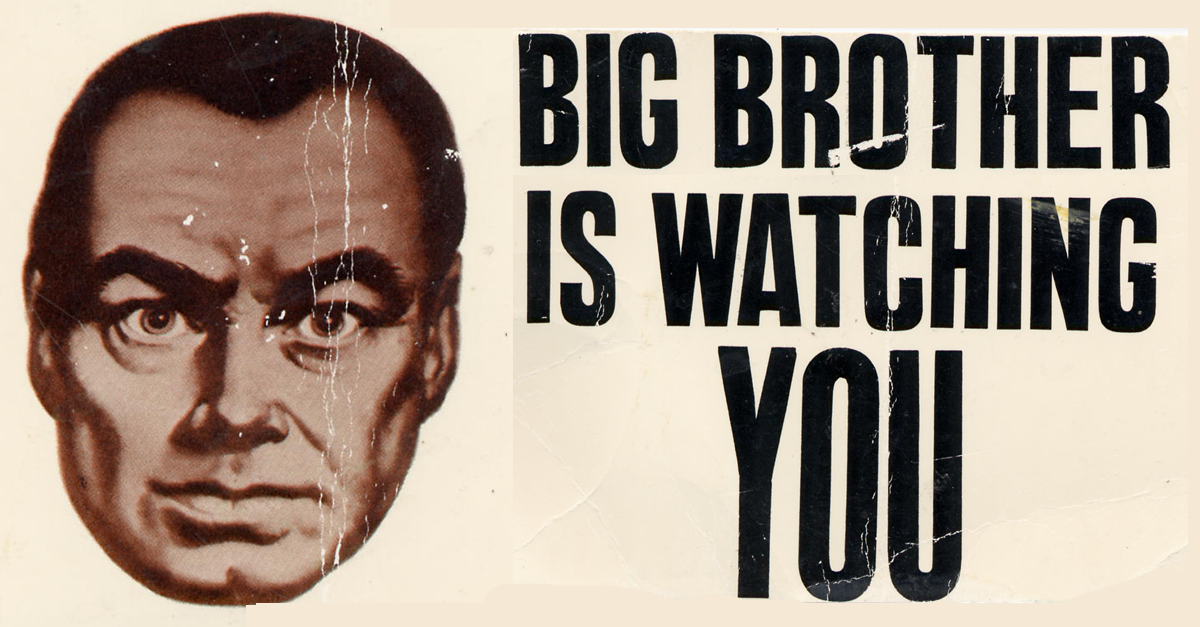
When you hear someone say, “Big Brother is watching you,” the image that pops up is usually a grainy CCTV feed or a glowing smartphone screen. That phrase, however, comes from George Orwell’s bleak novel 1984, a work that still feels eerily relevant. In this article we’ll unpack the origins of the “Big Brother” myth, explore how Orwell built his surveillance state, and ask why the warning still haunts us in an age of algorithms and data mining.
Big Brother Is Watching You: Orwell's Dystopia Explained
Orwell’s vision of a totalitarian regime hinges on three pillars: constant surveillance, the manipulation of language, and the erasure of personal memory. The Party’s slogan, “Big Brother is watching you,” isn’t just a catch‑phrase; it’s a psychological tool designed to make citizens internalize the state’s gaze. By making the watchful eye seem omnipresent, the Party turns obedience into a habit, not a choice.
The Birth of Big Brother
Orwell never based Big Brother on a single historical figure. Instead, he blended elements of Stalin’s purges, Nazi propaganda, and the British wartime censorship he observed firsthand. The name itself—simple, paternal, and slightly comforting—creates a paradox: a protective figure that is actually a tyrant. This duality makes the concept sticky, allowing it to seep into everyday conversation long after the book’s publication.
Surveillance Techniques in 1984
In the novel, the Party employs telescreens, hidden microphones, and even “thought police” to monitor every move. Telescreens broadcast Party propaganda while simultaneously scanning for dissent. The key to their effectiveness isn’t just the technology; it’s the belief that privacy no longer exists. As a result, citizens begin to self‑censor, a phenomenon psychologists call the “chilling effect.”
From Telescreens to Algorithms
Fast forward to the 21st century, and the tools have changed, but the principle remains. Social‑media platforms track likes, shares, and keystrokes, creating detailed profiles that can predict behavior. Governments deploy facial‑recognition cameras in public spaces, and some corporations sell aggregated data to third parties. While none of these systems are overtly hostile like Orwell’s Party, the cumulative loss of anonymity mirrors the novel’s warning.
Why the Phrase Endures
People keep invoking “Big Brother” because it condenses a complex fear into a single, instantly recognizable image. It captures the anxiety that technology could be weaponized against us, whether by authoritarian regimes or commercial interests. The phrase also serves as a shorthand for discussions about privacy rights, data protection laws, and the ethics of AI surveillance.
Lessons from Orwell’s Dystopia
Orwell didn’t just predict a future of endless cameras; he offered a roadmap for resistance. The novel stresses the importance of truth and memory. By controlling language (through Newspeak) and rewriting history, the Party eliminates any alternative narrative. In real life, protecting free speech, supporting independent journalism, and demanding transparency from tech companies are modern equivalents of preserving a shared reality.
Practical Steps to Guard Your Privacy
- Use end‑to‑end encrypted messaging apps for sensitive conversations.
- Regularly review privacy settings on social platforms and limit data sharing.
- Consider browser extensions that block trackers and force HTTPS connections.
- Support legislation that enforces corporate accountability for data misuse.
FAQ
What does “Big Brother” actually refer to?
It originally denotes the fictional, all‑seeing leader of Orwell’s Party, but today it’s a shorthand for any pervasive surveillance system—governmental or corporate—that threatens personal privacy.
How does Orwell’s concept differ from modern data collection?
Orwell imagined an overt, punitive state that punishes thought. Modern surveillance is often subtle, driven by profit motives, and justified as convenience or security. The underlying risk—loss of autonomous thought—remains similar.
Can individuals truly protect themselves from “Big Brother”?
Complete invisibility is unrealistic, but informed choices—like encrypting communications and demanding transparent data policies—can drastically reduce exposure.
Why do some critics say Orwell’s warnings are exaggerated?
They argue that democratic societies have checks and balances that limit abuse. Still, history shows that even well‑intentioned tools can be repurposed, making Orwell’s cautionary tale a valuable lens for ongoing debate.