What the 2022 Federal Estate Tax Exemption Means for You
Key Changes in the 2022 Exemption Amount
The Tax Cuts and Jobs Act (TCJA) lifted the federal estate tax exemption to $12.06 million per individual for 2022, a steep rise from the pre‑TCJA level of $5.49 million. Because the exemption is indexed for inflation, it will adjust slightly each year, but the 2022 figure remains one of the highest on record. Importantly, the exemption applies to the combined value of all assets—real estate, investments, cash, and even certain life‑insurance proceeds—before any tax is assessed.
For married couples, the exemption can effectively double, reaching $24.12 million when both spouses are eligible. However, the “portability” provision—allowing a surviving spouse to inherit any unused portion of the deceased partner’s exemption—requires a timely election on the estate tax return. Missing that deadline can erase a potentially huge tax shelter.
How the Exemption Impacts Estate Planning Strategies
With a $12.06 million shield, many families find themselves below the threshold where a federal estate tax bill would ever materialize. That doesn’t mean planning is irrelevant, though. Wealthy individuals still benefit from using the exemption strategically to reduce state-level estate taxes, which often have lower thresholds.
One common tactic is the “bypass trust” (or credit shelter trust), which places assets up to the exemption amount into a trust that isn’t subject to estate tax upon the first spouse’s death. The surviving spouse can still enjoy income from the trust, while the principal stays outside their taxable estate.
Another approach involves gifting. The annual gift‑tax exclusion remains at $16,000 per recipient in 2022, and gifts that exceed this amount count against the lifetime exemption. By making regular, tax‑free gifts, families can gradually shift wealth without ever triggering estate tax liability.
Common Misconceptions About the Federal Exemption
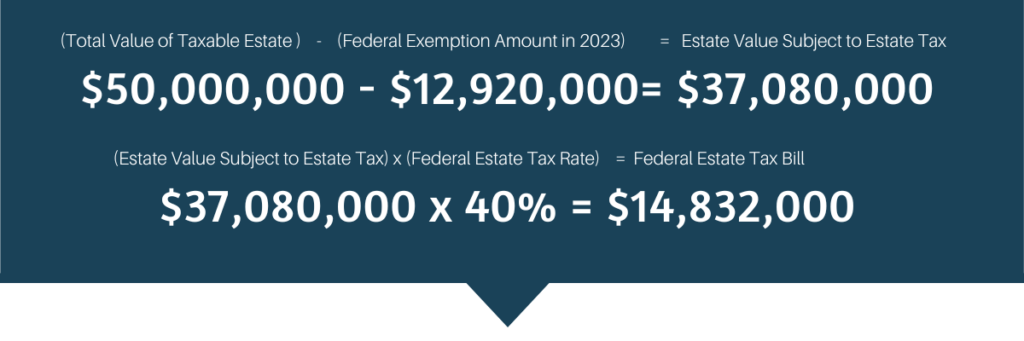
Many assume that the exemption means “no tax ever,” which isn’t quite right. If an estate exceeds the $12.06 million limit, the excess is taxed at a flat 40 percent rate. Moreover, the exemption does not protect against the generation‑skipping transfer (GST) tax, which has its own $12.06 million threshold.
Another myth is that the exemption automatically applies to all assets, regardless of how they are titled. In reality, ownership structures—like joint tenancy or tenancy‑in‑common—affect the taxable estate value. Properly re‑titling property can preserve more of the exemption for future generations.
Practical Steps to Leverage the 2022 Exemption
- Conduct a thorough asset inventory. List every asset, its fair market value, and how it’s owned. This baseline determines how close you are to the exemption limit.
- File Form 706 on time. Even if you think the estate falls below the exemption, filing can preserve portability for the surviving spouse.
- Consider a revocable living trust. While it doesn’t avoid estate tax, it simplifies asset transfer and can reduce probate costs.
- Utilize annual gifting. Regularly give up to $16,000 per person to reduce the taxable estate without tapping the lifetime exemption.
- Review state tax laws. Some states, like Washington and Oregon, have estate taxes with lower exemptions; state‑level planning may be needed even if the federal exemption is ample.
Frequently Asked Questions
What is the exact federal estate tax exemption for 2022? The exemption is $12.06 million per individual, or $24.12 million for a married couple when both spouses’ exemptions are combined.
Do I need to file a federal estate tax return if my estate is under the exemption? You are not required to file if the gross estate is below the exemption. However, filing can secure portability for a surviving spouse, which many advisers recommend.
Can the unused exemption be transferred to my children? No. The exemption is not inheritable; it can only be transferred to a surviving spouse through portability. Children may benefit indirectly if the spouse uses the exemption efficiently.
How does inflation affect the exemption after 2022? The exemption is adjusted annually for inflation, typically increasing by a few hundred thousand dollars each year. The exact figure for subsequent years is published by the IRS in late December.