Why Pi Isn’t Just 3.14: Unpacking Its True Mathematical Value
Is Pi really 3.14? The short answer
When most people picture the number pi, the familiar 3.14 flashes on screen. That three‑digit snapshot works well for quick estimates, but it hides the fact that pi is an infinite, non‑repeating decimal. In everyday calculations we round it, yet mathematicians have been probing its endless pattern for millennia.
What the 3.14 approximation actually means
Rounded to two decimal places, pi (π) equals 3.14. This level of precision is sufficient for tasks like measuring a garden fence or estimating the area of a pizza. The approximation stems from early civilizations that lacked the tools to express more digits, so they settled on a convenient shorthand.
The history behind the quest for more digits
Ancient Babylonians recorded pi as 25/8 (3.125), while the Egyptians used 256/81 (≈3.160). The Greek mathematician Archimedes devised a clever method of inscribing and circumscribing polygons around a circle, narrowing pi’s value to between 3.1408 and 3.1429. Over the centuries, mathematicians like Zu Chongzhi, Madhava, and later, Isaac Newton, pushed the known digits further, each breakthrough reflecting advances in algebra and calculus.
Why pi can’t be expressed exactly
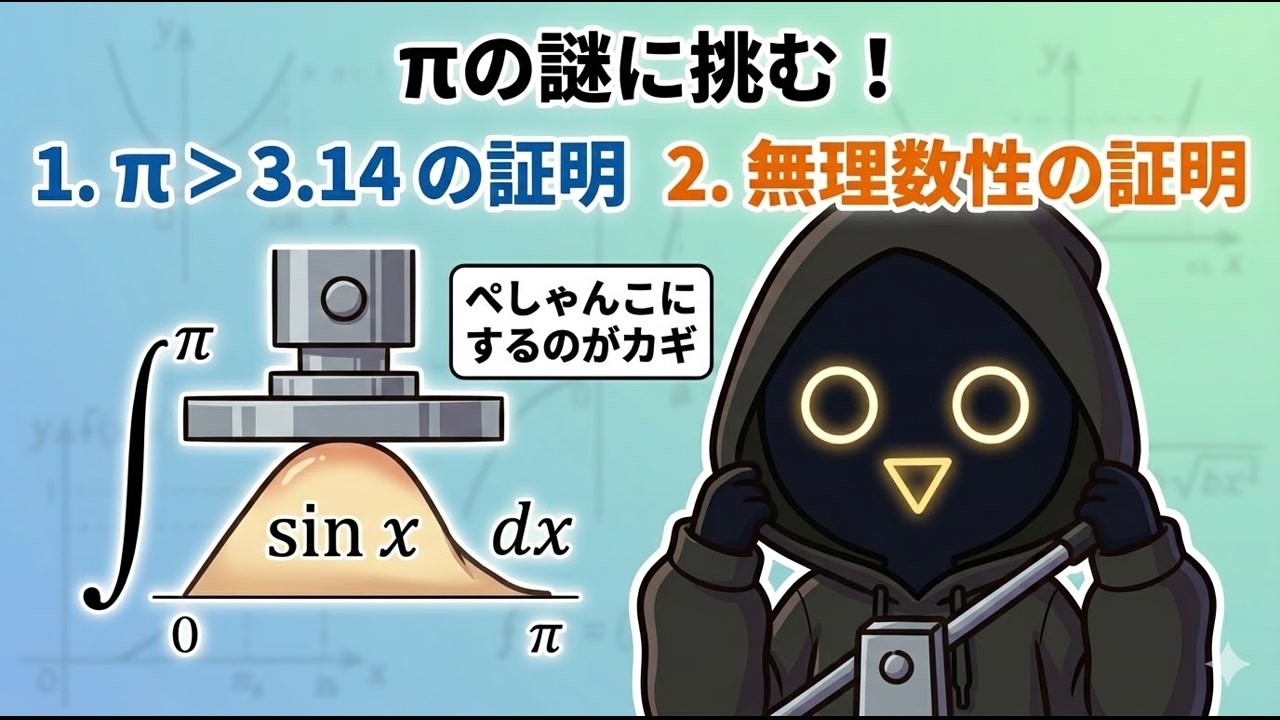
Pi is an irrational number, meaning it cannot be written as a simple fraction of two integers. Its decimal expansion goes on forever without settling into a repeating pattern. This property was proved rigorously in the 18th century by Johann Lambert, who showed that any rational approximation will always fall short of capturing pi’s true nature.
Transcendental nature and its consequences
Beyond irrationality, pi is also transcendental—it is not the root of any non‑zero polynomial equation with rational coefficients. This fact, established by Ferdinand von Lindemann in 1882, explains why squaring the circle (constructing a perfect circle using only a ruler and compass) is mathematically impossible. The proof rests on the fact that a transcendental number cannot be expressed using a finite combination of algebraic operations.
How many digits do we really need?
For most engineering and scientific work, a handful of digits suffices. NASA’s Jet Propulsion Laboratory, for instance, uses 15 decimal places when plotting interplanetary trajectories—more than enough to keep a spacecraft on course across billions of kilometers. The world record for calculating pi’s digits now exceeds 62 trillion, a feat achieved with modern supercomputers. While impressive, those extra digits have no practical impact on everyday measurements.
Pi in modern computing and culture
- Testing algorithms: Pi’s endless, pattern‑free sequence makes it an ideal benchmark for testing the precision and speed of new computer architectures.
- Artistic inspiration: Poets, musicians, and visual artists have turned the mystery of pi into works that celebrate its infinite complexity.
- Educational tool: Teachers often use pi‑related puzzles to spark curiosity about number theory and geometry.
Common misconceptions to clear up
Many assume that 3.14 is the “real” value of pi because it appears on calculators and classroom posters. In reality, that figure is a convenient rounding. Another myth claims that pi repeats after a certain number of digits—no credible mathematical evidence supports such a pattern. Finally, some think that the digits of pi contain hidden messages; while one can find any finite string within its infinite expansion, this is a statistical inevitability rather than a deliberate code.
Practical tips for using pi accurately
- For quick mental math, stick with 3.14 or the fraction 22/7.
- When higher precision matters—such as in engineering tolerances—use 3.1415926535 or a calculator that carries more digits.
- In programming, most languages provide a constant (often named Math.PI) that stores pi to double‑precision accuracy (about 15 decimal places).
Frequently Asked Questions
Q: Does pi have a final digit?
A: No. Pi’s decimal representation continues indefinitely without ending or settling into a repeat.
Q: Why do we celebrate Pi Day on March 14?
A: The date 3/14 mirrors the first three digits of pi (3.14), making it a playful reminder of the number’s cultural significance.
Q: Can pi be expressed as a simple fraction?
A: Not exactly. The fraction 22/7 is a close approximation, but any rational fraction will always fall short of pi’s true value.
Q: How is pi used in fields beyond geometry?
A: Pi appears in formulas for wave mechanics, probability distributions, and even in the normal distribution curve that underpins statistics.