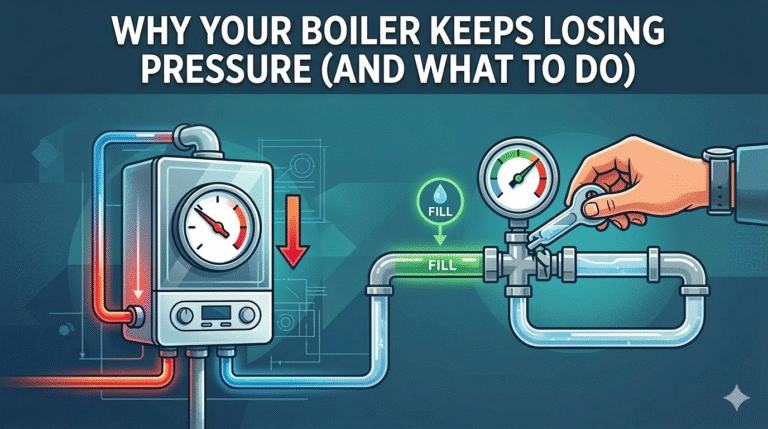
Why Your NTI Boiler Is Dropping Pressure: Common Causes and Fixes
NTI boilers are prized for their reliability, yet many homeowners find themselves staring at a gauge that keeps slipping toward the low‑pressure mark. If you’re wondering why your NTI boiler is losing pressure, you’re not alone. Pressure loss can be caused by a handful of familiar culprits – from faulty expansion tanks to subtle leaks that hide behind walls. In this guide, we’ll walk through the most common reasons, show you how to diagnose each one, and outline practical steps to restore and maintain the right pressure level.
Understanding Boiler Pressure Basics
A domestic boiler’s pressure should normally sit between 1.0 and 1.5 bar when cold and can rise to around 2.0 bar once it’s heated. NTI boilers, like other combi models, rely on a sealed system. When pressure drops, the system’s safety and efficiency are compromised, leading to erratic heating and, in worst cases, boiler shutdown.
1. Leaking Expansion Tank
The first suspect in most pressure‑drop investigations is the expansion tank. This component accommodates the thermal expansion of water as the boiler heats. Over time, the bladder inside can rupture, allowing water to leak into the system and lowering pressure.
- Signs: A sudden, continuous drop after a short heating cycle.
- Fix: Drain the system, replace the tank, and re‑fill to the recommended pressure.
2. Faulty Pressure Relief Valve (PRV)
The PRV safeguards the boiler against over‑pressure. If it’s stuck or defective, it can continuously vent water, causing a loss.
- Signs: A persistent low reading even after re‑charging.
- Fix: Test the valve by lifting its lever; if water escapes, replace the valve.
3. Hidden Water Leaks
Leaks might be subtle – a slow drip from a pipe joint, a damp spot on a wall, or even condensation that has seeped into the boiler’s expansion chamber.
- Signs: Dampness near radiators, a wet patch in the boiler room, or a sudden pressure fall after a brief heating period.
- Fix: Inspect all pipework and connections for cracks, tighten fittings, and seal any gaps with pipe joint compound.
4. Corroded or Blocked Water Pump
The circulator pump forces water through the heating system. Corrosion or debris can block the pump’s impeller, reducing flow and pressure.
- Signs: Low pressure despite a full tank, and a humming noise from the pump.
- Fix: Flush the pump, replace the impeller if clogged, and ensure the pump is running at the correct speed.
5. Incorrect System Filling or Bleeding
Over‑filling the boiler or failing to bleed radiators properly can trap air, preventing pressure from rising.
- Signs: Persistent low pressure after filling or a hissing sound from radiators.
- Fix: Bleed all radiators until a steady stream of water comes out, then top up the system to the proper pressure.
6. Temperature‑Controlled Pressure Drop
NTI boilers often feature a pressure‑controlled thermostat that reduces pressure when the water reaches a certain temperature. If the thermostat is miscalibrated, it may trigger earlier than necessary.
- Signs: Pressure falls right after heating to a set temperature.
- Fix: Have the thermostat calibrated or replaced by a qualified technician.
7. Water Ingress from the Main Supply Line
In some installations, a faulty pressure gauge or an open vent on the main water line can allow external water to enter or exit the system, affecting pressure.
- Signs: Pressure fluctuates wildly, especially during rain or changes in mains pressure.
- Fix: Check the main inlet valve for leaks and ensure the gauge is properly seated.
Diagnosing the Problem: A Step‑by‑Step Approach
1. Check the pressure gauge: Note the reading at the start of the day, after heating, and after a rest period. This gives clues about when pressure drops.
2. Inspect the expansion tank: Look for a sagging or swollen tank. Replace if necessary.
3. Test the PRV: Manually lift the lever. If water escapes, replace the valve.
4. Look for leaks: Run water through the system and watch for drips or wet spots.
5. Bleed radiators: Use a radiator key to release trapped air.
6. Call a professional: If the issue persists, schedule a service visit. Some problems, like internal corrosion, require expert tools.
Preventive Maintenance Tips
Regular checks can keep pressure loss at bay:
- Annual boiler servicing, including a pressure test.
- Monthly inspection of the expansion tank’s water level.
- Quarterly radiator bleeding.
- Replacing the PRV every 10–15 years.
By staying vigilant, you’ll reduce the chances of unexpected pressure drops and prolong the life of your NTI boiler.
FAQ
- What is the normal pressure range for an NTI boiler? Cold pressure should be between 1.0–1.5 bar; hot pressure can safely rise to about 2.0 bar.
- Can I fix a leaking expansion tank myself? It’s possible, but replacement usually requires draining the system and reinstalling, which can be messy.
- Is low pressure a sign of a faulty boiler? Not necessarily; it often points to a leak or vent. However, persistent low pressure can trigger safety cuts and indicate deeper issues.
- How often should I bleed my radiators? At least every other month, or whenever you notice cold spots or a hissing sound.