Which River Truly Holds the Title of World’s Longest?
When people ask about the longest river in the world, the answer isn’t as clear‑cut as you might think. For decades the Nile was taught in schoolbooks as the unrivaled champion, yet modern satellite data and fresh field surveys keep nudging the Amazon into the conversation. This back‑and‑forth reflects not only the sheer scale of the waterways but also how we choose to measure them.
The Longest River in the World: Current Consensus
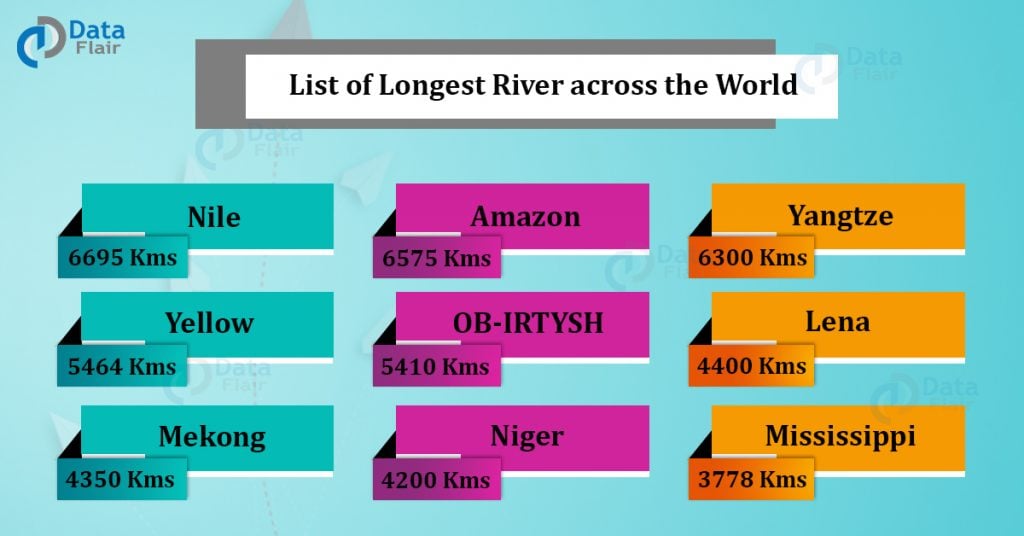
Today most geographers list the Nile at roughly 6,650 kilometres (about 4,130 miles) and the Amazon at about 6,575 kilometres (around 4,086 miles). The difference is a hair‑thin margin, and the debate hinges on which tributary is counted as the true source, how seasonal variations are treated, and whether the river’s meanders are fully accounted for. In practical terms, both rivers dominate their continents, carving ecosystems and shaping cultures along their banks.
How We Measure River Length
Measuring a river is not as simple as stretching a ruler from point A to point B. Scientists usually follow three steps:
- Identify the most distant source. For the Nile, that’s often the Kagera River in Rwanda; for the Amazon, it could be the Apurímac River in the Peruvian Andes.
- Trace the main channel. This involves mapping every bend, loop, and oxbow lake that the water follows.
- Account for seasonal change. In wet seasons, floodplains can extend a river’s apparent length dramatically.
Because each step invites interpretation, different agencies sometimes publish slightly different totals.
The Nile: Africa’s Ancient Artery
The Nile has been a lifeline for civilizations for millennia. Its two major tributaries—the White Nile, emerging from Lake Victoria, and the Blue Nile, springing from Ethiopia’s Lake Tana—merge near Khartoum before flowing northward into the Mediterranean. Archaeologists still uncover new sites along its banks, underscoring how the river has continuously nurtured human settlement.
Beyond history, the Nile’s flow is heavily regulated today. Dams such as the Grand Ethiopian Renaissance Dam have altered seasonal patterns, prompting regional talks about water rights and environmental impact.
The Amazon: The Planet’s Water Engine
While the Amazon may be slightly shorter on paper, its volume is unmatched. It discharges about 209,000 cubic metres per second, roughly five times the flow of the next largest river. This staggering output supports the Amazon rainforest, often called the “lungs of the Earth,” which in turn influences global climate patterns.
Explorers still discover new tributaries deep within the basin. The most recent surveys, aided by high‑resolution satellite imagery, suggest that if the river’s most distant headwater is counted, the Amazon could stretch beyond 7,000 kilometres, nudging it ahead of the Nile.
Why the Debate Matters
Beyond academic bragging rights, the “longest river” label can affect tourism, funding, and national pride. Countries may leverage the title to attract visitors—think Nile cruises or Amazon river expeditions—and to justify investments in conservation.
Moreover, understanding river length ties directly into climate research. Accurate measurements help model water availability, predict flood risks, and assess how changes in upstream land use ripple downstream.
Recent Technological Advances
LiDAR (light detection and ranging) and synthetic‑aperture radar now allow scientists to peer through dense canopy cover, mapping river courses that were previously invisible from the ground. These tools have clarified many disputed sections, especially in the Amazon’s tangled tributary network.
Additionally, crowdsourced data from trekkers and local communities are being integrated into open‑source GIS platforms, creating a more dynamic picture that can be updated in near real‑time.
Bottom Line: Both Rivers Deserve Celebration
Whether you side with the Nile’s ancient grandeur or the Amazon’s sheer power, the truth is that both waterways are marvels of nature. Their lengths may differ by a few kilometres, but the cultural, ecological, and economic footprints they leave are immeasurable.
Frequently Asked Questions
Is the Nile still officially the longest river? Most textbooks list the Nile as the longest, but a growing number of scientific publications argue that the Amazon could claim the title depending on measurement criteria.
How do seasonal floods affect river length? During rainy seasons, floodplains can expand the visible river channel, sometimes adding dozens of kilometres to the recorded length.
Can a river’s length change over time? Absolutely. Natural processes like erosion, tectonic shifts, and human interventions such as dam construction can lengthen or shorten a river’s main course.
Which river has the greatest water flow? The Amazon, by a wide margin, discharges more water than any other river on the planet.